
How to Advertise Your Business: A 6-Step Strategic Guide
To effectively advertise your business, you must follow a structured process that begins with defining clear goals and ends with continuous optimization based on performance data. This strategic approach ensures your budget is spent efficiently and delivers a measurable return. While advertising is just one component of a broader strategy, understanding the key differences between marketing and advertising is crucial for building a cohesive plan. This guide walks you through six essential steps to create and manage successful advertising campaigns that connect with your ideal customers and drive growth.
Step 1: Define Your Advertising Goals and Target Audience
Before launching any campaign, you must establish what success looks like and who you are trying to reach. Without clear objectives, you cannot measure performance or justify your spending. Start by setting SMART goals: Specific, Measurable, Achievable, Relevant, and Time-bound. Vague goals like “get more customers” are not helpful. Instead, aim for objectives like “Increase qualified leads from LinkedIn by 20% in the third quarter.”
Equally important is defining your target audience. You need a deep understanding of your ideal customer’s demographics, challenges, and online behaviors. Developing a detailed buyer persona helps you tailor your messaging and choose the right platforms. According to guidance for small businesses, you should profile your target markets to understand their needs and motivations. This foundation informs every decision you make, from the ad copy you write to the channels you select.

Step 2: Establish a Clear and Realistic Budget
Your advertising budget determines the scale and duration of your campaigns. There are several ways to approach budgeting, and the right one depends on your company’s stage and goals. A well-defined budget prevents overspending and forces you to prioritize high-impact activities. As the U.S. Small Business Administration suggests, a marketing plan is essential for guiding these financial decisions.
Common budgeting models include:
- Percentage of Revenue: Allocating a fixed percentage of your past or projected revenue. This method is simple but can be restrictive during growth phases.
- Competitive Parity: Matching your competitors’ spending. This approach can keep you visible but ignores your unique business goals.
- Objective and Task: Defining your goals first, then calculating the cost of the tasks required to achieve them. This is often the most effective method because it directly ties spending to results.
Regardless of the method you choose, treat your budget as a flexible guide. You should be prepared to adjust spending based on campaign performance, shifting funds toward what works and away from what does not.
Step 3: Select the Right Advertising Channels
With your goals, audience, and budget defined, the next step is to choose where to run your ads. The key is to be present where your target audience spends their time. For marketing agencies and SaaS companies, this often means a mix of digital channels.
- Search Engine Marketing (SEM): Platforms like Google Ads allow you to target users who are actively searching for solutions you provide. This is a powerful way to capture high-intent leads.
- Social Media Advertising: For B2B audiences, LinkedIn is an excellent platform for reaching specific job titles, industries, and company sizes. Other platforms like Facebook and Instagram can be effective for different campaign goals. A coherent social media strategy is vital for success here.
- SEO Content Marketing: While not a traditional ad buy, investing in SEO content marketing is a form of advertising that builds a long-term asset. High-quality blog posts, guides, and case studies attract organic traffic over time, reducing your reliance on paid channels. Effective planning with a structured approach to how you create a content calendar is fundamental to this strategy.
- Email Marketing: Email campaigns are ideal for nurturing leads you have already acquired. You can use them to promote specific offers, share valuable content, and guide prospects through the sales funnel.
Step 4: Create Compelling Ad Creative and Copy
Your ad’s creative elements, its visuals and text, are what ultimately persuade someone to click. The message must resonate with your target audience’s pain points and clearly communicate your value proposition. Your ad copy should be direct, benefit-oriented, and written in a tone that reflects your brand identity.
Every ad needs a strong call to action (CTA). Tell the user exactly what you want them to do next, whether it is “Sign Up Now,” “Download the Guide,” or “Request a Demo.” A/B test different versions of your copy, headlines, and images to see what performs best. Small changes can often lead to significant improvements in click-through and conversion rates.
Step 5: Launch and Actively Monitor Your Campaigns
Once your ads are live, your work has just begun. Continuous monitoring is essential to ensure your campaigns are performing as expected and your budget is being used effectively. You should track key performance indicators (KPIs) that align with the goals you set in the first step.
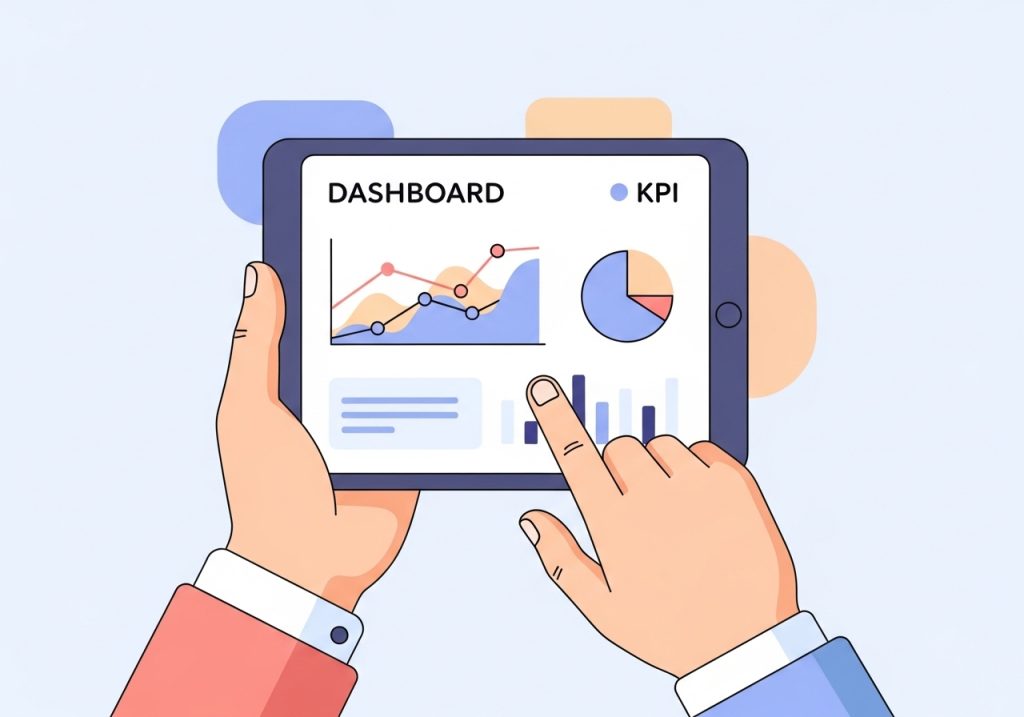
Important metrics to watch include:
- Click-Through Rate (CTR): The percentage of people who see your ad and click on it. A low CTR might indicate that your creative or targeting is off.
- Cost Per Click (CPC): How much you pay for each click.
- Conversion Rate: The percentage of users who complete a desired action (e.g., a purchase or form submission) after clicking your ad.
- Cost Per Acquisition (CPA): The total cost to acquire one new customer. This is one of the most important metrics for measuring profitability.
- Return on Ad Spend (ROAS): The amount of revenue generated for every dollar spent on advertising.
Step 6: Analyze Performance and Optimize for Growth
The final step is to use the data you have collected to make your campaigns better. Regularly analyze your performance reports to identify trends and insights. Which ad copy generated the most conversions? Which audience segment had the lowest CPA? Which channel delivered the highest ROAS?
Use these insights to optimize your campaigns. Optimization is an ongoing process of refining your strategy. This could involve reallocating your budget to top-performing channels, pausing underperforming ads, testing new audience segments, or refining your landing pages to improve conversion rates. Successful advertising is not about a single campaign but about building a repeatable system for testing, learning, and improving over time.
By following these six steps, you can create a structured advertising plan that minimizes wasted spend and maximizes your return on investment. The process is cyclical, as the insights from your analysis will inform the goals and strategies of your next campaign.
Advertising is effective, but creating valuable content is the foundation of a modern growth strategy. Consistent, high-quality content builds trust, attracts organic traffic, and nurtures leads. But it also takes an incredible amount of time.
Ascend fully automates your blog content creation right from your WordPress dashboard. It handles keyword research, content planning, writing, and publishing, so you can scale your organic growth without the manual effort. See how Ascend can build your content engine for you. Learn more about Ascend.

Written by
Ascend
Ascend is an automated SEO engine for WordPress. It handles keyword research, writes high-quality, search-optimized content, and publishes it directly to your site, so your traffic can grow on autopilot. Learn more