
Small Business Content Marketing: A Practical Guide for Growth
Small business content marketing is the strategic process of creating and distributing valuable, relevant articles, videos, and other media to attract a defined audience and drive business growth. Unlike large corporations with extensive marketing departments, smaller companies must be efficient, focusing on tactics that deliver a significant return on a limited investment of time and money. A well-executed content strategy helps you build authority, generate organic traffic, and nurture leads without a massive advertising budget.
What Is Small Business Content Marketing?
At its core, content marketing is a long-term strategy based on building a strong relationship with your target audience. Instead of directly pitching your products or services, you provide content that solves their problems, answers their questions, and helps them achieve their goals. This approach positions your brand as a credible expert and a trusted resource, making customers more likely to choose you when they are ready to buy.
The practice is a key component of a larger digital strategy. While there are many ways to approach SEO content marketing, the goal for a small business is always to create a sustainable engine for growth. The right content attracts visitors through search engines, educates them, and guides them toward becoming customers.
Common types of content for small businesses include:
- Blog Posts: Informative articles that address customer pain points and rank for relevant keywords.
- Case Studies: Success stories that show how your product or service helped a real customer.
- Email Newsletters: Regular communications that nurture your relationship with subscribers and promote new content.
- Social Media Updates: Short-form content that engages your community and drives traffic back to your website.
- Ebooks and Guides: In-depth resources that offer comprehensive solutions to complex problems, often used to generate leads.
Key Content Challenges for Small Businesses
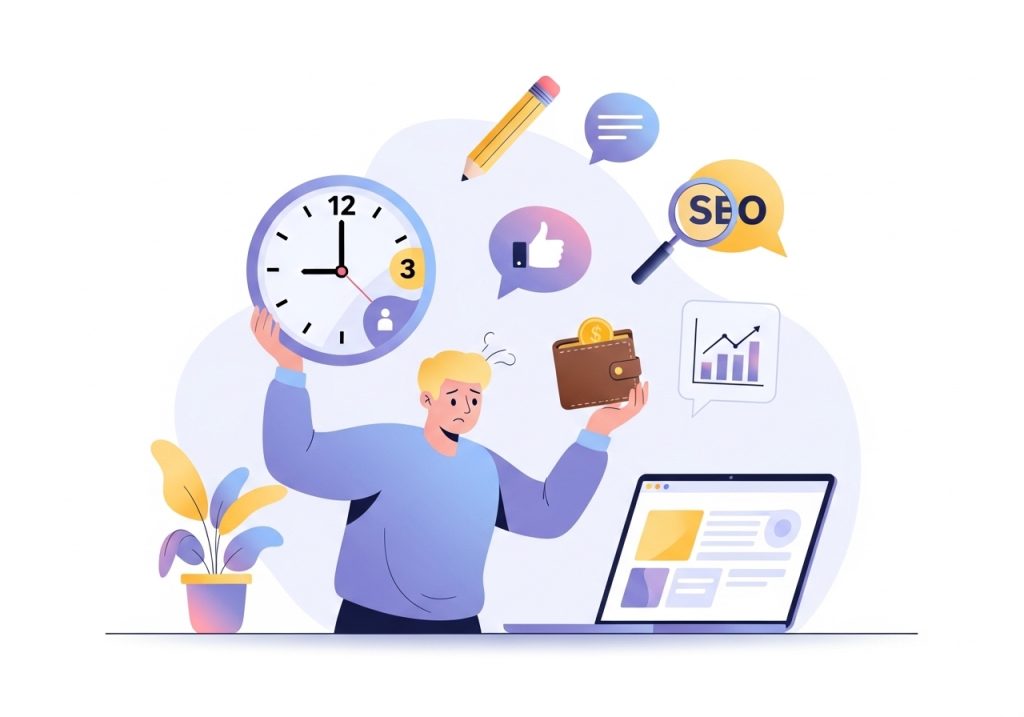
While the benefits are clear, executing a content marketing plan presents several common hurdles for smaller teams. These challenges often prevent businesses from achieving the consistency needed to see meaningful results.
The most frequent obstacles include:
- Limited Time: Small business owners and their teams often have many responsibilities. Finding the hours to research, write, edit, and publish content consistently is a major challenge.
- Budget Constraints: Without a large marketing budget, hiring professional writers, designers, or an entire content team is often not feasible.
- Lack of Expertise: Many small businesses lack in-house expertise in SEO, writing, or content strategy. This can lead to creating content that fails to attract the right audience or rank in search results.
- Maintaining Consistency: Publishing high-quality content sporadically is not effective. The struggle to maintain a regular publishing schedule means many content marketing efforts lose momentum before they can deliver a return.
A Strategic Framework for Effective Content Creation
Overcoming these challenges requires a clear and focused strategy. A structured approach ensures that every piece of content you create serves a purpose and contributes to your business objectives. This framework helps you use your limited resources for maximum impact.
Define Your Audience and Goals
Before you write a single word, you need to know who you’re writing for and what you want to achieve. According to Salesforce, the first step is to identify your target audience by analyzing your existing customers and understanding their needs. Create detailed buyer personas that describe their demographics, goals, and challenges. Once you know your audience, set specific, measurable goals. The U.S. Small Business Administration suggests goals like increasing market share or growing sales by a certain percentage.
Choose the Right Content Formats
Not all content formats are created equal. Your choice should depend on your audience’s preferences and your team’s strengths. While video content is highly engaging, it can be resource-intensive to produce. For many small businesses, a blog is the most practical and effective starting point. It’s a powerful tool for SEO, allows for in-depth storytelling, and establishes your website as a central hub for your expertise. You can repurpose blog content into social media posts, email newsletters, and other formats to extend its reach.
Plan Your Publishing Schedule
Consistency is more important than frequency. It’s better to publish one high-quality article per week than five mediocre ones. A content calendar is essential for staying organized and ensuring a steady flow of content. Planning ahead helps you align your content with business goals, seasonal trends, and product launches. A well-structured plan is central to how to create a content calendar that keeps your team on track and your audience engaged.
How to Measure Content Success with Limited Resources
You don’t need expensive analytics platforms to track the performance of your content. Free tools like Google Analytics and Google Search Console provide all the data you need to understand what’s working. Focus on a few key metrics that directly reflect your business goals.
- Organic Traffic: This metric shows how many people are finding your website through search engines. A steady increase in organic traffic indicates your SEO and content efforts are paying off.
- Keyword Rankings: Track your position in search results for your most important keywords. Improving rankings means your content is gaining authority and visibility.
- Time on Page: This engagement metric tells you how long visitors are spending with your content. A longer time on page suggests the content is valuable and relevant to the reader.
- Conversion Rate: Measure how many visitors take a desired action, such as signing up for your newsletter, filling out a contact form, or making a purchase. This is the ultimate measure of your content’s effectiveness.
Using Automation to Scale Your Content Efforts
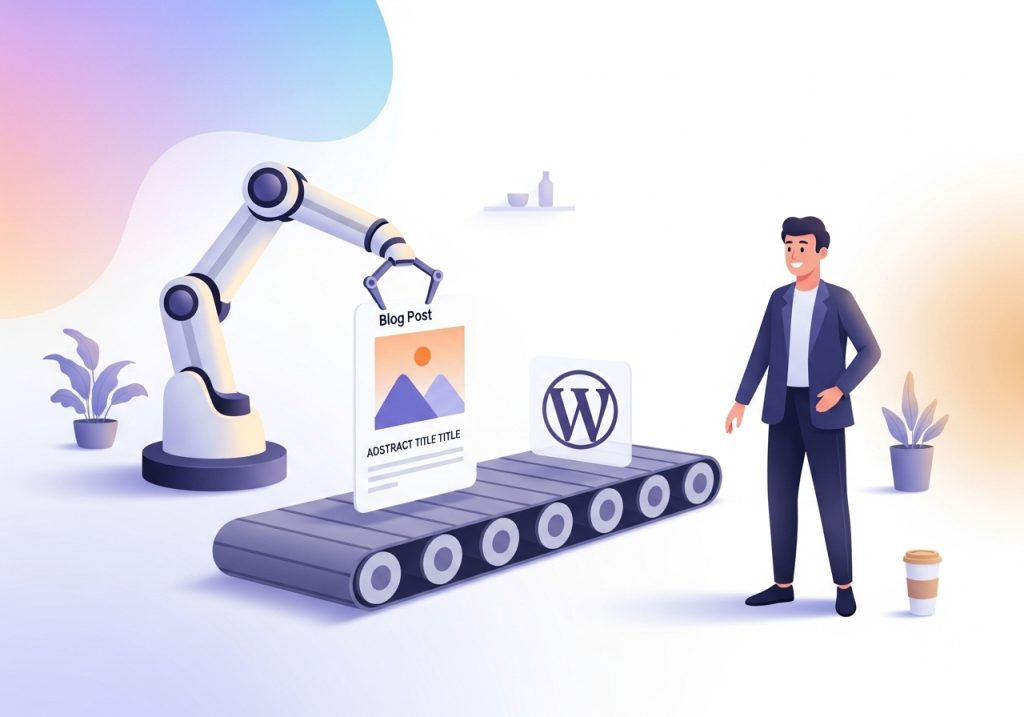
The challenges of time and resource limitations can be significantly reduced with technology. Automation and artificial intelligence are making it possible for small businesses to compete with larger companies by producing high-quality content at scale. These tools can handle many of the time-consuming tasks associated with content creation, freeing up your team to focus on strategy and customer relationships.
Understanding what AI content creation is helps clarify its value. AI-powered platforms can perform keyword research, generate content calendars, write drafts, find images, and even publish articles directly to your blog. This streamlines the entire workflow, from idea to publication.
By automating the process, you can:
- Save Dozens of Hours: Reduce the time spent on manual tasks like keyword research, outlining, and writing.
- Ensure Consistency: Maintain a regular publishing schedule without fail, building momentum for your SEO.
- Improve Quality: Leverage AI to create well-researched, SEO-optimized content that resonates with your audience.
- Focus on High-Value Work: Allow your team to concentrate on strategic planning and building customer relationships instead of getting bogged down in content production.
For a small business, content marketing is not a luxury. It is a fundamental part of building a sustainable and profitable brand. While resource constraints are real, a strategic framework combined with modern automation tools makes it possible to create a powerful content engine. By focusing on your audience’s needs and consistently delivering value, you can drive organic growth and achieve your business goals.
Tired of the content marketing grind? Ascend fully automates your WordPress blog, from keyword research to daily publishing. Get your time back and let AI drive your organic growth. Discover how Ascend makes expert-level SEO content effortless.

Written by
Ascend
Ascend is an automated SEO engine for WordPress. It handles keyword research, writes high-quality, search-optimized content, and publishes it directly to your site, so your traffic can grow on autopilot. Learn more