
What Are AI Content Creation Tools and How Do They Work?
AI content creation tools are software applications that use artificial intelligence to generate, optimize, and distribute marketing materials like blog posts, social media updates, and images. For marketing agencies and SaaS companies, these platforms offer a way to scale content production, overcome creative blocks, and maintain a consistent publishing schedule without dedicating hundreds of hours to manual work. By learning a brand’s voice and objectives, the right tool can transform content strategy from a time-intensive task into an automated growth engine.
What Can AI Content Creation Tools Actually Do?
Modern AI tools go far beyond simple text generation. They have become multifaceted assistants for marketing teams, capable of handling complex creative and strategic tasks. According to GWI, today’s tools can draft copy, generate imagery, and even identify what an audience cares about. This versatility makes them valuable for agencies and product teams looking to streamline operations.
The core functions generally fall into several key categories:
- Text and Copy Generation: This is the most well-known capability. AI can produce everything from long-form blog posts and articles to short-form ad copy, email newsletters, and social media captions. Advanced models can adapt their tone and style to match specific brand guidelines.
- Image and Video Creation: Generative AI can create unique, royalty-free images from simple text prompts. This is useful for blog-featured images, social media graphics, and ad creatives. Some tools can also edit video or create simple animations from scripts.
- Research and Ideation: AI can rapidly analyze search engine results pages (SERPs), identify trending topics, and generate blog post ideas based on target keywords. This automates a significant portion of the initial content strategy phase.
- Content Optimization: Many tools include features that analyze written content for SEO performance, readability, and brand voice consistency. They can suggest improvements, recommend internal links, and ensure the content is structured to rank well in search engines. Understanding these features is a key part of learning how to get more blog traffic effectively.
Key Features to Look for in AI Content Creation Tools
Not all AI tools are created equal, especially for professional use cases. A freelancer might only need a basic text generator, but an agency or a growing SaaS company requires more sophisticated features. When evaluating different platforms, look for capabilities that support a complete workflow, not just one-off tasks.
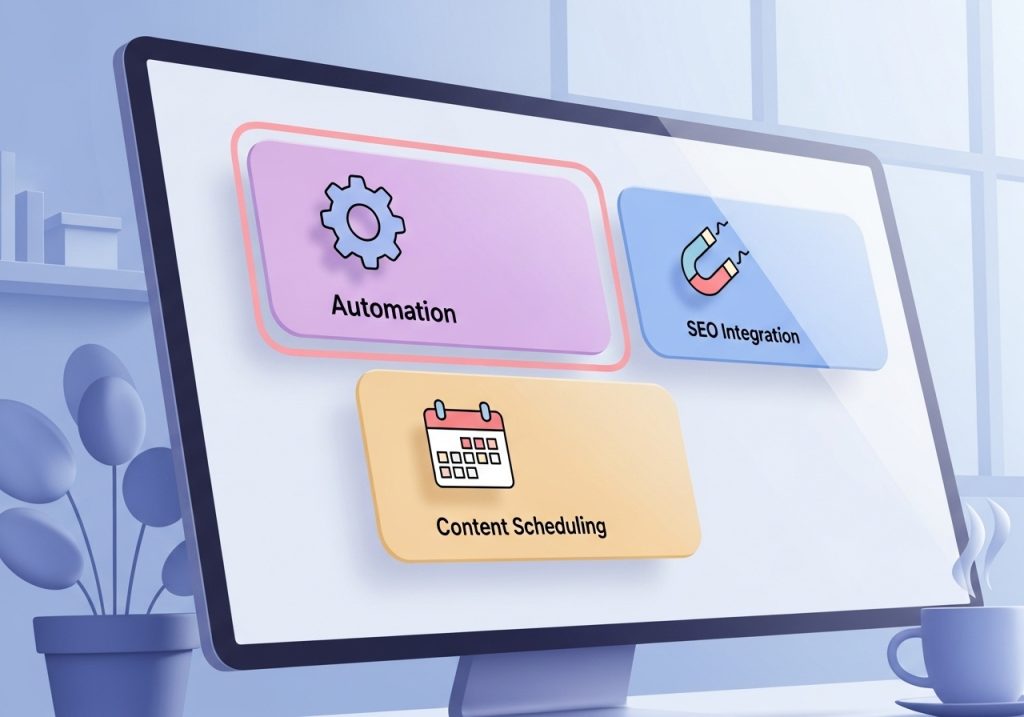
Here are the critical features to consider:
- Brand and Audience Learning: The best tools can be trained on your company’s existing content, style guides, and audience personas. This ensures the generated content sounds genuinely on-brand and resonates with your target market. Truly understanding what branding in marketing means allows the AI to create more authentic and effective content.
- Deep SEO Integration: Look for tools that do more than just insert keywords. A powerful platform should conduct keyword research, analyze competitor content, and automatically structure articles with SEO best practices in mind. Native integration with plugins like Yoast or Rank Math is also a significant benefit.
- Full Workflow Automation: The real value for busy teams comes from automation. A top-tier tool should be able to manage a content calendar, automatically generate and publish posts, add internal links, and create on-brand imagery without daily human intervention.
- WordPress-Native Experience: For teams running their site on WordPress, a tool that operates directly within the admin dashboard eliminates friction. It removes the need to copy and paste content between different applications, saving time and reducing the chance of formatting errors.
- Collaboration and Review: For agencies and marketing teams, the ability to review, edit, and approve content within the platform is essential. Look for features that support a clear workflow for drafts and feedback before anything goes live.
How to Integrate AI into Your Agency’s Workflow
Adopting AI content creation tools requires a strategic approach. Simply turning on a tool without a plan can lead to inconsistent or off-brand content. A thoughtful integration process ensures that AI enhances your team’s capabilities rather than creating more work. As noted by the U.S. Chamber of Commerce, these tools can help small businesses tackle writing, design, and video, but only when used correctly.

Step 1: Define Your Goals and Guidelines
Before you begin, establish what you want to achieve. Are you trying to increase publishing frequency, improve SEO rankings, or free up your writers for more strategic work? Document your brand voice, tone, and style guidelines. This information will be used to train the AI and ensure consistency.
Step 2: Choose a Tool That Automates, Not Just Generates
Select a platform that aligns with your goals. If your main challenge is the entire content lifecycle, a simple text generator will not be enough. Look for a solution that can handle keyword research, calendar planning, drafting, and publishing. This end-to-end approach delivers the most significant time savings.
Step 3: Train the AI on Your Brand
The initial setup is critical. Provide the AI with your website URL, style guides, information about your target audience, and examples of your best-performing content. The more context the tool has, the higher the quality of its output will be. This “training” phase is what separates generic content from strategic, on-brand assets.
Step 4: Establish a Human-in-the-Loop Review Process
Even the most advanced AI benefits from human oversight. Design a simple review process where a content manager or editor can quickly approve or provide feedback on generated drafts. A good AI tool makes this easy, often directly within the WordPress dashboard. The goal is review and approval, not heavy editing or rewriting from scratch.
Beyond Generation: Automating Your Entire Content Pipeline
The conversation around AI content creation is shifting. While generating text is a powerful capability, the greater opportunity lies in automating the entire content pipeline. For agencies and SaaS companies, efficiency is paramount. The time spent researching keywords, building content calendars, finding images, adding internal links, and formatting posts in WordPress adds up quickly.
Statistics show that adoption is already widespread, with over 75% of marketers using AI tools to some degree. The next step is moving from using AI as a simple assistant to implementing it as an autonomous system for content marketing. Platforms that can learn a brand’s needs and then independently execute a 30-day content strategy represent a major leap forward. This involves creating a complete marketing calendar that the AI fills and executes on its own.
This level of automation allows small teams to compete with larger organizations by consistently publishing high-quality, SEO-optimized content. It frees up human experts to focus on higher-level strategy, client relationships, and creative direction. The right AI content tool doesn’t just write for you; it manages the entire process of growing organic traffic, making consistent content marketing achievable for any business.
Ready to put your content marketing on autopilot? Ascend automates your entire WordPress blog, from keyword research and content calendars to writing and publishing daily, on-brand articles. Stop spending hours on content and start seeing traffic growth. Discover how Ascend can transform your content strategy today.

Written by
Ascend
Ascend is an automated SEO engine for WordPress. It handles keyword research, writes high-quality, search-optimized content, and publishes it directly to your site, so your traffic can grow on autopilot. Learn more