
What Is Customer Impact and How Do You Measure It?
Customer impact is the measurable, positive effect that a product or service has on a customer’s business or personal goals. It moves beyond simple satisfaction to quantify the tangible value and outcomes a customer achieves by using your solution. For marketing agencies, SaaS companies, and creator platforms, understanding this concept is essential for building loyalty, reducing churn, and driving sustainable growth.
While metrics like revenue and customer satisfaction are important, they only tell part of the story. Revenue shows that a customer paid, and satisfaction shows they were happy with the transaction. Customer impact, however, reveals why they are happy and why they will continue to pay. It’s the difference between a client liking your report design and a client crediting your campaign for a 20% increase in qualified leads.
Defining Customer Impact Beyond Revenue
At its core, customer impact is the “so what?” of your product. A customer doesn’t buy a CRM to have a database; they buy it to improve sales team efficiency and close more deals. They don’t hire a marketing agency to get more web traffic; they hire one to generate revenue from that traffic. Impact is the successful achievement of that underlying goal.
This value can be broken down into two primary categories:
- Quantitative Impact: These are the measurable, data-driven outcomes. This is often what builds the business case for your product or service. Examples include increased revenue, cost savings, time saved, lead generation growth, or improved conversion rates.
- Qualitative Impact: These outcomes are less tangible but can be just as significant. They relate to the user’s experience and professional life. Examples include reduced stress, improved team collaboration, enhanced brand reputation, or the ability to focus on more strategic work.
Focusing on impact shifts your company’s perspective from being a vendor to being a partner. You stop selling features and start selling outcomes. This change is critical for building long-term relationships, especially in B2B environments where ROI is a constant consideration.
Why Customer Impact Is a Critical Metric for Growth
Tracking and optimizing for customer impact directly influences your company’s most important growth levers. When customers see and feel the value you provide, it creates a positive feedback loop that strengthens your business from the inside out.
Here are the primary benefits of making customer impact a key performance indicator:
- Reduces Customer Churn: Customers who can clearly connect your product to a positive business outcome are significantly less likely to leave. Their subscription is not a cost center; it’s an investment with a clear return.
- Increases Lifetime Value (LTV): Happy, successful customers are more open to upgrading their plans, buying additional services, and expanding their use of your platform. Their success becomes your success.
- Fuels Word-of-Mouth Marketing: A customer who says, “This tool saved my team 10 hours a week,” is your most powerful marketing asset. This type of specific, outcome-based advocacy can create powerful social proof, a key driver behind the bandwagon effect that drives new sales.
- Guides Product Development: Understanding which features deliver the most impact helps you prioritize your product roadmap. You can invest resources in enhancements that create more value, rather than just building what is most requested.
- Creates Compelling Case Studies: The data you gather on customer impact becomes the foundation for powerful testimonials and case studies that resonate with new prospects far more than a simple list of features.
Key Frameworks for Measuring Customer Impact
Measuring customer impact requires a combination of quantitative data and qualitative feedback. No single metric can tell the whole story. Instead, you need to build a comprehensive view using several different tools and methods.
Quantitative Metrics
Start with the data you can collect directly from your product or through customer-provided information.
- Product Adoption Rates: Track the usage of key features that are designed to deliver value. If you have a feature that automates a critical workflow, high adoption of that feature is a strong indicator of impact.
- Customer Health Scores: Develop a composite score that blends data points like product usage frequency, support ticket volume, and survey results. This score can help you proactively identify customers who are succeeding and those who may be at risk of churning.
- Calculated ROI: For B2B SaaS and agency clients, work with them to calculate a direct return on their investment. If your service costs $1,000 per month and you can demonstrate it generates $5,000 in new revenue or savings, that is a clear and powerful measure of impact.
Qualitative Metrics
Numbers alone are not enough. You need to understand the story behind the data through direct communication.
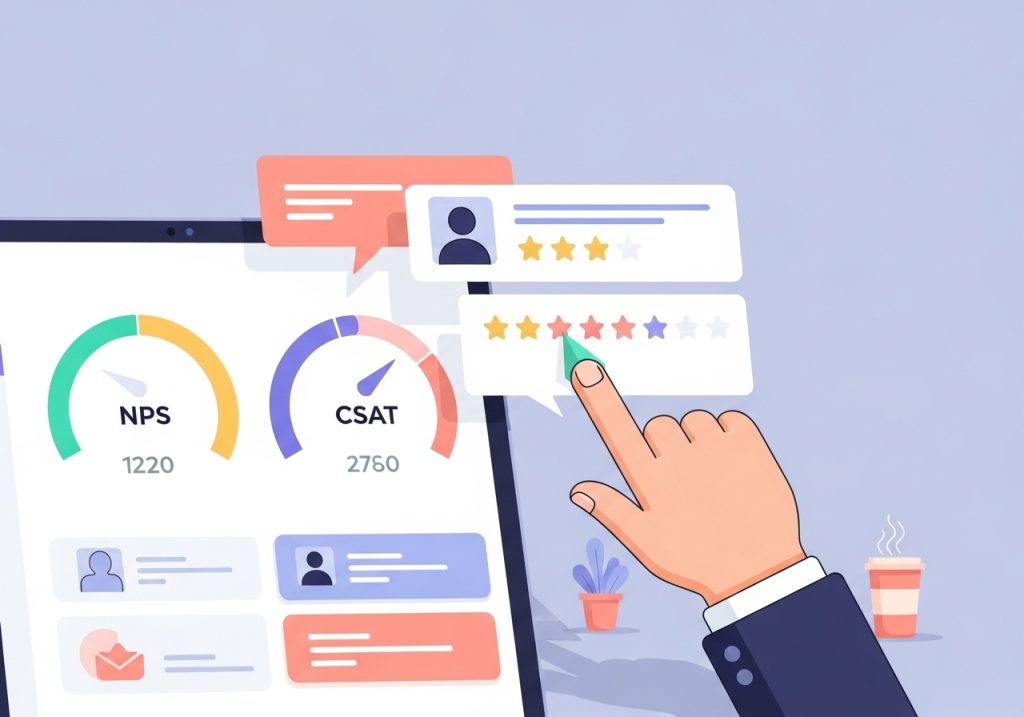
- Net Promoter Score (NPS) and Customer Satisfaction (CSAT): While not direct measures of impact, these survey-based metrics are valuable indicators of customer sentiment. As noted by research firms like Forrester, they are often correlated with positive customer experiences. An upward trend in NPS can suggest that customers are realizing greater value over time.
- In-Depth Customer Interviews: The most direct way to understand impact is to ask. Schedule regular calls with customers and ask open-ended questions like, “What are you able to do now that you couldn’t do before?” or “How has our service changed your team’s day-to-day workflow?”
- Case Study Development: The process of creating a case study forces you to work with a customer to articulate and quantify the specific value they have received. This process is as valuable for you as the final marketing asset.
Strategies to Enhance Customer Outcomes with Content
Once you understand what creates value for your customers, you can use content to systematically help every user achieve that same success. Content is not just a tool for attracting new leads; it is a critical part of the customer experience that drives adoption, retention, and ultimately, impact.

A strategic content plan ensures that customers get the most out of your product long after the initial sale.
- Targeted Onboarding Content: Create tutorials, welcome emails, and getting-started guides that are focused on helping a new user achieve their first “win” as quickly as possible. This builds momentum and demonstrates immediate value.
- Strategic Use-Case Guides: Move beyond simple feature documentation. Develop blog posts and guides that show customers how to achieve specific goals. For example, instead of an article on “How to Use Our Reporting Feature,” create one on “How to Build a Monthly Growth Report That Wows Your Stakeholders.” This directly ties your product to a positive business outcome and can be a key part of a strategy to get more blog traffic from users seeking solutions.
- Success Stories and Case Studies: Showcase how your best customers are using your product. This not only provides social proof but also gives other users a blueprint for success that they can follow.
- A Proactive Knowledge Base: A well-organized and comprehensive knowledge base empowers users to solve their own problems. It reduces friction and helps them continue making progress without waiting for a support response. Maintaining this with a consistent content and marketing calendar is key.
Measuring customer impact is no longer a “nice-to-have.” It is a fundamental practice for any business that wants to build a loyal customer base and grow sustainably. By shifting your focus from what your product does to what it helps your customers achieve, you align your entire organization around the one thing that matters most: delivering real, measurable value. Start by integrating these measurement frameworks into your operations, and use the insights to build better products, create more helpful content, and forge stronger customer partnerships.
Creating content that delivers real customer impact takes time and consistency. Ascend automates your entire blog content strategy, from keyword research to daily publishing right inside WordPress. Let our AI handle the content, so you can focus on your customers. Discover how to automate your content engine.

Written by
Ascend
Ascend is an automated SEO engine for WordPress. It handles keyword research, writes high-quality, search-optimized content, and publishes it directly to your site, so your traffic can grow on autopilot. Learn more