
A Practical Guide to Marketing Information Management
Marketing teams today operate in an environment saturated with data. From website analytics and CRM records to social media engagement and competitor performance, the volume of information can be overwhelming. The challenge is not just accessing this data, but organizing and using it effectively. This is where a structured approach to marketing information management becomes essential for sustainable growth, turning disconnected facts into a clear path forward.
What Is Marketing Information Management?
Marketing information management (MIM) is the systematic process of gathering, storing, analyzing, and distributing marketing data. Its primary goal is to provide decision-makers with timely and accurate information. A well-executed MIM strategy transforms raw data points into coherent insights that guide strategic planning, campaign execution, and performance evaluation. It creates a reliable foundation for all marketing activities, from high-level strategy to daily tactical adjustments.
Think of it as the central nervous system for your marketing department. It connects all the disparate sources of information, processes the signals, and allows the organization to react intelligently. Without a proper system, teams often rely on intuition or incomplete data sets, leading to inefficient spending, mismatched messaging, and missed opportunities. With a system in place, every decision is backed by evidence, increasing its chances of success.
Why Strong Data Management Is Crucial for Growth
Implementing a formal system for managing marketing information provides several direct benefits. It moves teams from being reactive to proactive, allowing them to anticipate market shifts and customer needs instead of just responding to them. For agencies and SaaS companies, where agility is key, this capability is a significant competitive advantage.
- Informed Decision-Making: With reliable, centralized data, you can make smarter choices about budget allocation, channel focus, and messaging. It answers questions like, “Which marketing channel delivers the highest lifetime value?” or “What content topics resonate most with our target persona?” This reduces guesswork and increases the probability of success for your campaigns.
- Deeper Customer Understanding: By consolidating customer data from various touchpoints (website interactions, support tickets, sales calls, social media comments), you can build a comprehensive view of your audience. This helps you understand their behavior, preferences, and pain points, which is critical for personalization, customer segmentation, and product development.
- Competitive Advantage: A strong MIM system allows you to monitor competitor activities and market trends closely. Identifying a competitor’s new pricing strategy, a successful content format, or a new consumer trend early gives you the ability to adapt your own plans. This market awareness prevents you from being caught off guard and helps you find openings to exploit.
- Improved Efficiency: When information is organized and accessible, your team spends less time searching for data and more time acting on it. A centralized dashboard is much more efficient than digging through ten different platform analytics. This streamlined workflow improves productivity and allows marketers to focus on high-value strategic tasks like campaign creation and analysis.
The Core Components of a Marketing Information System
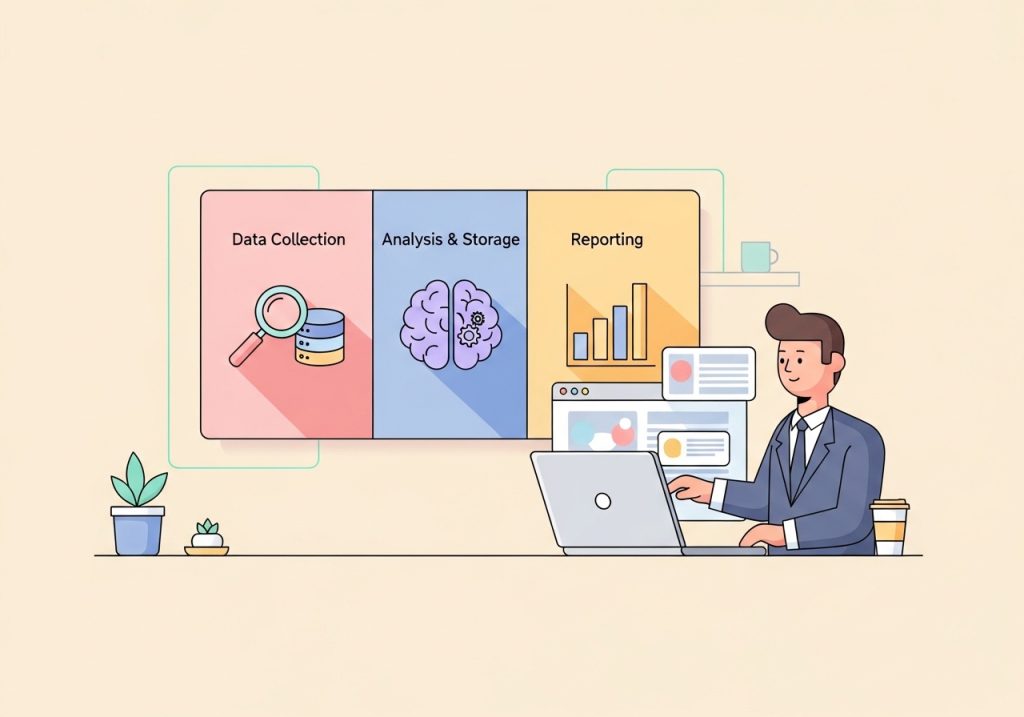
A marketing information system (MIS) is the technological and procedural framework that supports your management process. It is typically composed of three main parts that work together to turn data into strategy. Understanding these components helps you see where your own company’s data practices are strong and where they might need improvement.
1. Internal Data Records
This is the foundation of your MIS. It includes all the information your company generates internally through its operations. Examples include sales figures from your payment processor, website traffic reports from Google Analytics, customer information from your CRM, and historical campaign performance data. This data is valuable because it is unique to your business and provides a clear picture of past results and current operations. It is your single source of truth about what has already happened.
2. Marketing Intelligence
Marketing intelligence involves gathering external information about the market environment. This is an ongoing process of observing what is happening “out there.” This could mean tracking competitor press releases, reading industry publications, monitoring social media conversations about your brand and your competitors, or using SEO tools to analyze competitor keyword strategies. This component keeps you informed about what is happening outside your organization, providing crucial context for your internal data.
3. Marketing Research
While marketing intelligence is about ongoing observation, marketing research is focused on collecting data to answer specific, targeted questions. This can be done through surveys, focus groups, customer interviews, or A/B testing. For example, if you want to understand why a particular feature is underutilized, you might learn how to do market research with a targeted user survey. This provides direct, focused feedback to solve a particular problem or test a specific hypothesis, giving you qualitative or quantitative answers that general intelligence cannot.
Practical Applications for Agencies and SaaS Companies
For agencies and SaaS companies, marketing information management is not just a theoretical concept. It has direct applications that affect daily operations and long-term strategy. By integrating data from the different components of an MIS, these organizations can uncover powerful insights that lead to better results for themselves and their clients.

An advertising agency might combine a client’s CRM data (internal records) with market trend reports (marketing intelligence) to identify a new target demographic. By analyzing sales patterns alongside industry news, they could discover an underserved audience and develop a campaign specifically for them. A data-driven proposal showing this clear opportunity is far more compelling to a client than one based on assumptions.
A SaaS company could use its MIS to connect product usage data with customer support tickets and user feedback surveys (a mix of internal records and marketing research). If they notice a drop-off in usage for a certain feature that corresponds with an increase in support queries about it, they have a clear signal to improve that feature’s user interface or documentation. This proactive approach helps improve customer retention and reduces churn.
Automating Your Marketing Data and Content Workflow
The final step in a modern marketing information system is turning insights into action. One of the most critical actions for organic growth is consistent, high-quality content creation. The data you gather about customer questions, keyword opportunities, and competitor content gaps should directly inform your editorial calendar. An insight sitting in a report is useless; it only becomes valuable when it influences what you create and publish.
This is where automation becomes a powerful asset. Instead of manually translating keyword research into content briefs, then into drafts, and finally into published articles, tools can streamline this entire workflow. Properly integrating AI copywriting into your workflow can bridge the gap between data analysis and content execution. Systems like Ascend use AI to perform keyword research, generate a content calendar based on strategic opportunities, and automatically publish SEO-optimized blog posts directly to your WordPress site.
By connecting your marketing intelligence (keyword and competitor data) directly to an automated content creation engine, you close the loop. You ensure that the insights gained from your marketing information system are consistently acted upon. This approach allows small teams and busy agencies to maintain a high-impact content strategy and promote your blog to grow your audience without the crushing manual overhead. It ensures that your valuable data drives tangible results in organic traffic and lead generation.
Tired of manually turning marketing insights into content? Ascend automates your entire content workflow, from keyword research to publishing, right inside WordPress. Let our AI build your content calendar and publish SEO-optimized posts daily, so you can focus on strategy while your organic traffic grows. Learn how Ascend makes content creation hands-off.

Written by
Ascend
Ascend is an automated SEO engine for WordPress. It handles keyword research, writes high-quality, search-optimized content, and publishes it directly to your site, so your traffic can grow on autopilot. Learn more