
How to Automate Content Creation and Scale Your SEO
You can automate content creation by using AI-powered platforms to handle keyword research, scheduling, drafting, and publishing, which frees up your team to focus on strategy. This approach transforms content marketing from a series of manual, time-consuming tasks into an efficient, scalable system. For marketing agencies and SaaS companies, automation is a direct path to increasing output and improving the consistency of their SEO efforts without a proportional increase in headcount or resources.
What is Automated Content Creation?
Automated content creation is the process of using software and AI to manage and execute tasks across the entire content lifecycle. This goes far beyond just generating text. A true automation system handles everything from identifying valuable keywords and topics to generating a content calendar, drafting SEO-optimized articles, finding on-brand images, and publishing directly to your blog with proper internal links. It involves understanding how AI-powered content generation works and applying it to a full workflow.
The goal is not to remove humans from the process, but to eliminate the repetitive, low-value work that consumes so much of a content team’s time. Instead of spending hours brainstorming topics or formatting posts in WordPress, strategists can focus on higher-level activities like analyzing performance, refining audience targeting, and aligning content with business objectives. It systemizes the production pipeline so high-quality content can be published consistently.
The Key Benefits of Automating Your Content Workflow
Integrating automation into your content strategy produces several significant advantages, especially for organizations that depend on organic traffic for growth.
- Maintain Publishing Consistency: Search engines reward websites that publish high-quality content regularly. Automation ensures a steady flow of articles, helping you build topical authority and maintain the freshness signals that matter to search engines.
- Increase Operational Efficiency: By automating tasks like keyword research, brief creation, and drafting, you can reduce the time it takes to go from idea to published post from days to hours. This efficiency allows smaller teams to compete with larger organizations.
- Scale SEO Efforts: Automation makes it possible to target a wider range of keywords and build out comprehensive topic clusters without overwhelming your team. As your business grows, your content engine can scale with it effortlessly.
- Ensure Brand and Voice Alignment: Sophisticated automation tools can be trained on your brand’s specific style, tone, and existing content. This ensures that every article, even when produced at scale, supports your strategy for maintaining consistent brand management.
How to Effectively Automate Content Creation
A successful automation strategy involves integrating several key stages of the content process into a single, cohesive workflow. The most effective systems connect these steps to remove manual handoffs and delays.
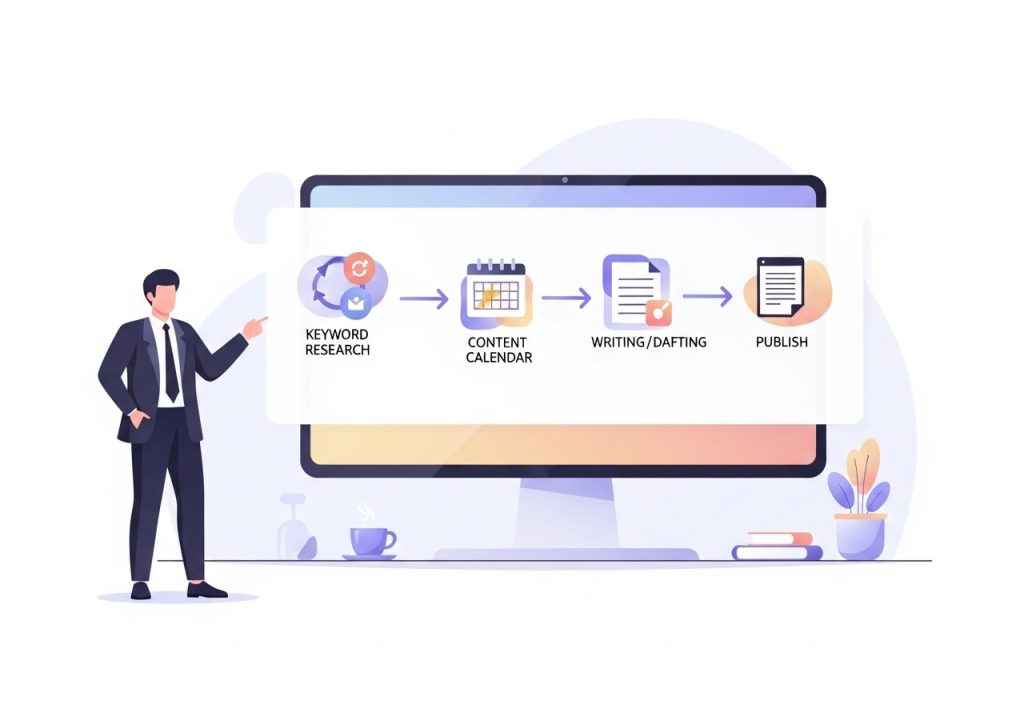
Step 1: Automated Keyword Research and Topic Clustering
The foundation of any SEO strategy is keyword research. Automation tools can analyze your website, competitors, and industry to identify high-opportunity keywords. They can also group these keywords into logical topic clusters, providing a clear roadmap for what to write about to build authority.
Step 2: Dynamic Content Calendar Generation
Once topics are identified, the system can automatically populate a content calendar. This plan can be based on strategic priorities, such as targeting low-difficulty keywords first or building out a specific topic cluster. This removes the guesswork and administrative burden of manual planning.
Step 3: AI-Assisted Drafting and Optimization
With a topic and keywords selected, an AI writer can generate a full, SEO-optimized draft. Modern platforms do more than just write. They incorporate target keywords, structure the article with proper headings, and write in a specified brand voice. Human review is still important for ensuring accuracy and adding unique insights, but the bulk of the writing work is done automatically.
Step 4: Integrated Publishing and Internal Linking
The final step is publishing. A fully automated system integrates directly with your CMS, like WordPress. It can format the post, add relevant images, and even insert internal links to other relevant articles on your blog. This final step saves significant administrative time and helps improve your site’s SEO structure.
Choosing the Right Tools for Content Automation
When looking to automate your content, you have two primary options: piecing together multiple point solutions or adopting an all-in-one platform.
Point Solutions: This approach involves using separate tools for each task: one for keyword research, another for AI writing, and another for scheduling. While this gives you flexibility, it can create inefficiencies. The process can be streamlined using tools like Keywords Everywhere, Ahrefs, and AI content generation tools, but you constantly have to move data between them, and the workflow is prone to breaking.
All-in-One Platforms: A tool like Ascend integrates the entire content workflow into a single place, often directly within your WordPress dashboard. It handles everything from keyword research to final publication. This approach is generally more efficient, as it creates a connected system where each step flows directly into the next. There are many AI powered content creation platforms available, but an integrated one simplifies the tech stack and reduces the potential for manual error.
Practical Use Cases for Agencies and SaaS Companies

Content automation is particularly valuable for organizations that rely on content for lead generation and client services.
For Marketing Agencies: An agency can use automation to scale its content services for multiple clients without proportionally increasing its team size. It allows them to deliver consistent, high-quality blog posts that drive measurable SEO results, increasing client satisfaction and retention. It also standardizes the quality of output across all accounts. For SaaS Companies: A SaaS business can use automation to build a powerful top-of-funnel content engine. By consistently publishing helpful articles that target their ideal customer’s pain points, they can attract qualified organic traffic. This strategy helps them establish authority in their niche and generate a steady stream of product-qualified leads directly from their blog.Measuring the ROI of Automated Content
To justify the investment in automation, it is important to track its impact. Key metrics to monitor include:
- Organic Traffic Growth: The primary goal of SEO content is to increase visitors from search engines. Track this month-over-month.
- Keyword Rankings: Monitor how your rankings for target keywords improve over time as you publish more content.
- Time and Cost Savings: Calculate the number of hours your team saves on content production. Assign a monetary value to this time to demonstrate a clear financial return.
- Conversions and Leads: If your blog is designed to generate leads, track how many new contacts or sign-ups originate from your automated articles.
By focusing on these metrics, you can clearly demonstrate how automation is contributing to core business goals. The most effective way to start is by implementing an integrated tool that handles the repetitive tasks directly within your existing workflow, like WordPress. This allows you to test, measure, and scale your efforts with confidence.
Ready to put your content on autopilot? Ascend automates your entire SEO content workflow, from keyword research to publishing, right inside WordPress. Stop spending hours on manual tasks and start scaling your organic growth. Discover how Ascend can transform your content strategy.

Written by
Ascend
Ascend is an automated SEO engine for WordPress. It handles keyword research, writes high-quality, search-optimized content, and publishes it directly to your site, so your traffic can grow on autopilot. Learn more