
How to Boost SEO for Free: 7 Actionable Steps
To boost SEO for free, you must focus on foundational on-page optimizations, technical health, and content quality using freely available tools and platforms. While many advanced SEO tools come with a significant cost, the most impactful strategies for improving search engine visibility require more strategic effort than financial investment. Agencies and SaaS companies can achieve substantial organic growth by consistently applying these no-cost methods.
This guide outlines seven practical steps your team can take to improve your website’s ranking in search engine results pages (SERPs) without spending a dime on software. From technical audits to content strategy, these actions form the bedrock of a successful organic marketing program.
Step 1: Set Up and Monitor Google Search Console
Google Search Console (GSC) is an essential, free service that helps you understand how Google sees your website. Think of it as a direct line of communication between you and the search engine. Setting it up is simple. You just need to verify ownership of your site.
Once connected, GSC provides critical data and alerts. You can:
- Identify technical errors: GSC will flag indexing problems, mobile usability issues, and other crawl errors that could hurt your rankings.
- Analyze search performance: See which keywords drive traffic to your site, your average position for those keywords, and your click-through rate (CTR). This data is invaluable for refining your content strategy.
- Submit sitemaps: Help Google discover and index all the important pages on your website more efficiently.
Regularly checking your GSC reports is one of the most effective free habits you can build for sustainable SEO success. For a comprehensive overview of fundamentals, you can explore the Google SEO starter guide.
Step 2: Optimize On-Page Elements
On-page SEO refers to optimizing individual web pages to rank higher and earn more relevant traffic. These are changes you control completely and cost nothing to implement.
Focus on these key elements for every important page:
- Title Tags: This is the clickable headline that appears in search results. Ensure it includes your target keyword and is compelling enough to encourage a click. Keep it around 60 characters to avoid truncation.
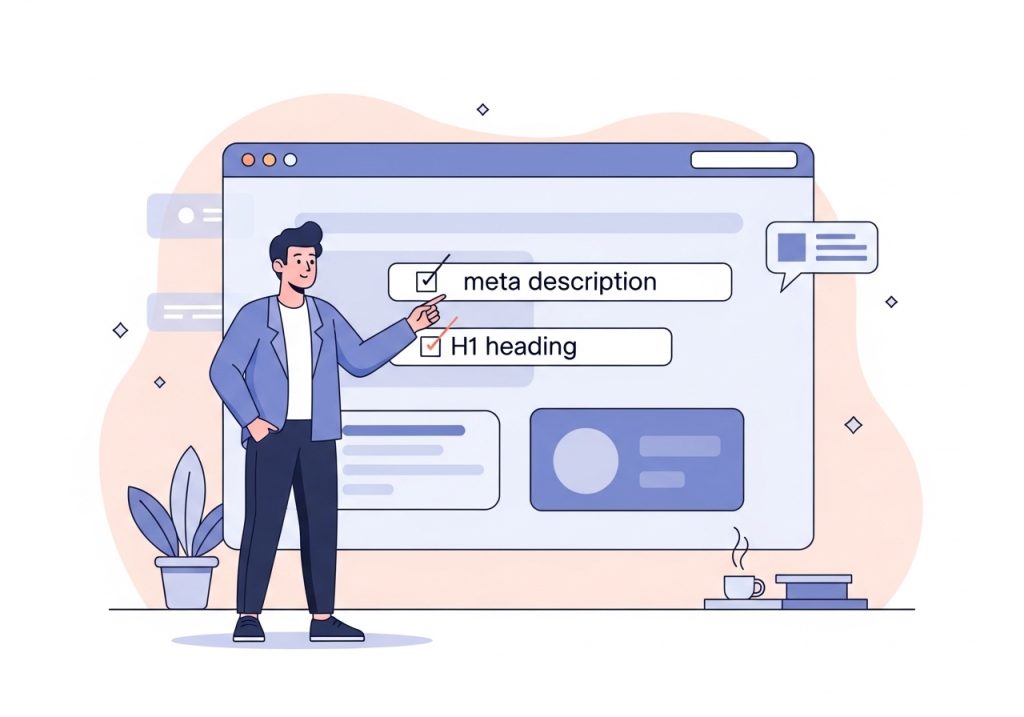
- Meta Descriptions: The short snippet of text under the title tag in SERPs. While not a direct ranking factor, a well-written meta description improves CTR. Include your keyword and a clear value proposition. Aim for 155 characters or less.
- Header Tags (H1, H2, H3): Use headers to structure your content logically. Your main title should be an H1 tag containing your primary keyword. Use H2s and H3s for subheadings to improve readability and help search engines understand the content’s hierarchy.
Step 3: Conduct Keyword Research with Free Tools
Understanding what your audience searches for is fundamental to SEO. You don’t need expensive subscriptions to get started. Several powerful, free tools can provide the insights you need to build a content plan.
- Google Keyword Planner: While designed for advertisers, it provides useful keyword ideas and search volume estimates. You need a Google Ads account to access it, but you don’t have to run any paid campaigns.
- Google Trends: Compare the relative popularity of search terms over time. This is excellent for identifying seasonal trends or finding breakout topics in your industry.
- AnswerThePublic: This tool visualizes the questions people ask around a specific keyword, providing a wealth of ideas for blog posts, FAQs, and service pages.
Combining insights from these tools can help you create a content strategy that aligns perfectly with user intent.

Step 4: Create and Improve High-Value Content
Content is the currency of SEO. Search engines aim to provide users with the most relevant and helpful answers to their queries. Your goal is to create that content. This involves identifying the questions your target audience has and creating comprehensive, well-structured articles, guides, or landing pages that answer them better than anyone else.
You can also boost SEO for free by improving existing content. Use Google Search Console to find pages that are ranking on the second or third page of Google (positions 11-30). These pages have potential. By updating them with fresh information, adding more detail, and optimizing their on-page elements, you can often push them onto the first page for a significant traffic increase.
Step 5: Build Your Internal Linking Structure
Internal links are hyperlinks that point from one page on your site to another page on the same site. They are incredibly powerful for SEO and completely free to implement. A strong internal linking strategy helps in several ways:
- It allows users to navigate your website easily.
- It helps search engine crawlers discover new content.
- It distributes authority (or “link equity”) throughout your site. A link from a high-authority page to another page can pass some of that authority, boosting the linked page’s ranking potential.
When you publish a new blog post, look for opportunities to link to it from relevant older posts. Likewise, link from your new post to other important pages on your site, like core service pages or related articles. Use descriptive anchor text (the clickable words) to give search engines context about the linked page.

Step 6: Claim and Optimize Your Google Business Profile
For any organization that serves a specific geographic area, including agencies and SaaS companies with a physical office, a Google Business Profile (GBP) is a critical free SEO tool. It’s the information box that appears in Google Maps and on the right side of the search results for branded queries.
Claiming and fully optimizing your profile can dramatically increase your visibility in local search. Make sure to:
- Fill out every section completely and accurately.
- Add high-quality photos of your business.
- Encourage clients to leave reviews and respond to them professionally.
- Use the Posts feature to share updates, offers, and news.
Step 7: Pursue High-Quality Backlinks Strategically
Backlinks (links from other websites to yours) are a strong signal to search engines that your site is a trusted authority. While some companies pay for links, you can earn them for free with a smart strategy. The Beginner’s Guide to SEO from Moz provides a deep dive into how backlinks and other factors contribute to search rankings.
One effective method is to create “linkable assets.” This could be an original research report, a comprehensive guide, a free tool, or a compelling infographic. When you create something genuinely valuable, other websites in your industry are more likely to link to it as a resource. After creating your asset, conduct targeted outreach to journalists, bloggers, and site owners who might find it useful for their audience.
This process takes time and effort, but earning even a few high-authority backlinks can have a significant positive impact on your overall SEO performance.
Automate Your SEO Content Strategy
Following these steps will undoubtedly improve your website’s search engine performance. However, the process of researching keywords, writing and optimizing content, building links, and managing a calendar is time-consuming. For busy marketing teams at agencies and SaaS companies, dedicating consistent resources can be a major challenge.
Ascend fully automates your blog content creation right inside WordPress. Our platform handles keyword research, content planning, and daily publishing of high-quality, on-brand articles. This allows you to reap the benefits of consistent SEO content without the manual overhead. If you want to scale your organic traffic hands-free, see how Ascend can help.
Ready to Grow Your Organic Traffic on Autopilot?
Implementing a consistent SEO and content strategy takes time that busy teams just don’t have. Ascend automates the entire process, from keyword research to daily publishing, so you can focus on building your business while your organic traffic grows. Discover a smarter way to do content marketing.

Written by
Ascend
Ascend is an automated SEO engine for WordPress. It handles keyword research, writes high-quality, search-optimized content, and publishes it directly to your site, so your traffic can grow on autopilot. Learn more