
What Is Content Automation? A Guide for Agencies and SaaS
Content automation is the use of technology and software to streamline the entire content marketing lifecycle, from planning and creation to publishing and analysis. For marketing agencies and SaaS companies, it’s a method for scaling content production and improving efficiency without a proportional increase in headcount or resources. Instead of just scheduling social media posts, true content automation manages complex workflows, helping teams produce high-quality blog posts, articles, and other materials consistently.
Defining Content Automation: More Than Just Scheduling
Many people associate automation with simple tasks like scheduling a post to go live at a specific time. While that is a form of automation, modern content automation covers a much wider scope. It involves using integrated systems, often powered by artificial intelligence, to handle repetitive and time-consuming aspects of content marketing. This includes everything from initial keyword research to final performance tracking.
According to Adobe, content automation refers to tools and processes that perform functions in the content lifecycle with minimal human input. It’s not about removing humans from the process entirely. Instead, it’s about empowering strategists, writers, and editors by handling the groundwork. This allows your team to focus on high-impact activities like strategy, creative direction, and final review, rather than getting bogged down in manual research, data entry, or formatting.
Think of it as the difference between a simple kitchen timer and a fully automated meal-prep service. The timer helps with one small part of the process. The service handles the shopping, chopping, and recipe planning, leaving you to do the final cooking and seasoning. Content automation is the meal-prep service for your marketing team, managing the end-to-end content lifecycle.
Why Content Automation Is a Priority for Growth-Focused Teams
Adopting content automation is a strategic decision for teams that need to scale their organic growth efforts efficiently. Manual content creation is slow, expensive, and difficult to scale. As your company or client base grows, the demand for fresh, relevant content increases exponentially. Automation provides a direct solution to this challenge, offering several distinct advantages.

- Maintains Publishing Consistency: Search engines reward websites that publish high-quality content regularly. Automation ensures a steady stream of content goes live on schedule, helping you build topical authority and maintain audience engagement.
- Improves Operational Efficiency: It dramatically reduces the time spent on manual tasks like topic brainstorming, keyword research, formatting, and uploading content. This frees up your marketing team to focus on strategy and creativity.
- Scales Content Output: With automation, you can significantly increase your content volume without hiring more people. This is particularly valuable for agencies managing multiple client blogs or SaaS companies expanding into new markets.
- Enhances Content Quality: The best automation tools integrate SEO best practices, check for plagiarism, and ensure brand voice consistency. This helps maintain high standards even as you produce more content.
- Reduces Costs: By optimizing workflows and reducing the need for additional staff or freelancers, automation can lower the overall cost per piece of content, leading to a better return on investment.
How Does Content Automation Work in Practice?
A comprehensive content automation platform typically integrates several technologies to manage the entire workflow. The process isn’t a black box; it’s a series of connected steps that transform a strategic goal into a published blog post. These integrated systems are sometimes called content machines because of how they structure and execute the production process from start to finish.
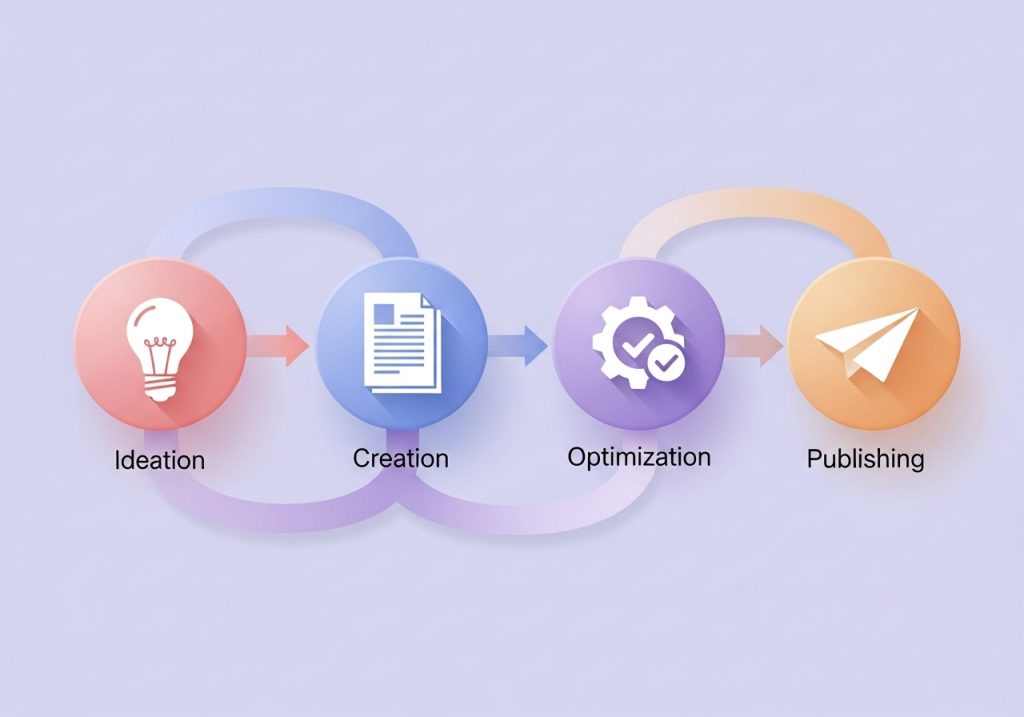
The typical stages include:
- Planning and Strategy: The system starts by analyzing your brand, target audience, and competitors. It performs keyword research to identify high-opportunity topics and organizes them into a content calendar. This ensures your content strategy is aligned with business goals and SEO objectives from the beginning.
- Content Creation: Once a topic is approved, AI-powered tools handle the initial drafting, structuring the article with headings, paragraphs, and lists. The AI can also generate on-brand images and find relevant internal linking opportunities, saving hours of manual work.
- Optimization and Enrichment: The drafted content is then optimized for search engines. This often involves integrating with SEO plugins like Yoast or Rank Math to fine-tune meta descriptions, check keyword density, and improve readability scores automatically.
- Review and Publishing: The content is presented to a human editor for a final review and polish. After approval, the system automatically publishes the post directly to your CMS, such as WordPress, at the scheduled time.
Key Applications for Agencies and SaaS Companies
Content automation is not a one-size-fits-all solution. Its application varies based on the specific needs of a business. For marketing agencies and SaaS companies, the use cases are particularly compelling because both rely on scalable content to drive growth.
For Marketing and Advertising Agencies
Agencies juggle content strategies for multiple clients, each with unique goals and brand voices. Automation helps them deliver consistent results at scale. Key applications include:
- Client Blogging Services: Automate the creation of monthly blog content for dozens of clients, ensuring each receives high-quality, SEO-optimized posts on schedule.
- Proposal and Report Generation: Use templates and data integration to quickly generate content proposals, performance reports, and case studies.
- Social Media Management: Repurpose long-form blog content into social media updates, captions, and ad copy automatically.
For SaaS and Productivity Tools
SaaS companies use content marketing to attract, educate, and retain customers. The goal is to establish thought leadership and build a strong organic presence. Automation supports this by:
- Driving Organic Traffic: Consistently publishing helpful blog content is a proven way of driving sustainable organic traffic. Automation ensures the content engine never stops.
- Creating Knowledge Base Articles: Automatically generate support documentation and tutorials based on new product features or common customer questions.
- Product Updates and Announcements: Quickly draft and publish release notes, feature announcements, and other product-related communications.
Choosing the Right Content Automation Tools
With a clear understanding of what content automation is, the next step is finding the right platform. Not all tools are created equal. Some focus on a single aspect of the content lifecycle, like writing or social scheduling, while others offer a complete, end-to-end solution. When evaluating options, consider platforms that handle the entire content lifecycle to maximize efficiency.
Here are key features to look for:
- Deep CMS Integration: The tool should connect directly with your website’s content management system, especially WordPress. This allows for seamless, one-click publishing and removes the need for manual copy-pasting.
- Intelligent AI Capabilities: The platform’s AI should be sophisticated enough to understand your brand voice, identify relevant keywords, create coherent and well-researched drafts, and generate appropriate images.
- Full-Funnel Workflow Management: A valuable tool will manage everything from keyword research and calendar planning to writing, SEO optimization, and publishing.
- User-Friendly Interface: The platform should be intuitive and easy to manage, allowing your team to oversee the entire process from a single dashboard without a steep learning curve.
Content automation is no longer a futuristic concept; it is a practical solution for modern marketing teams. By automating the repetitive parts of content creation, you empower your team to focus on what they do best: developing creative strategies that drive real business growth. The right tool acts as a force multiplier, allowing you to achieve more with your existing resources.
Ready to put your content marketing on autopilot? Ascend is a complete content automation platform built directly into WordPress. It handles everything from keyword research and content calendars to writing and publishing, so you can grow your organic traffic without the manual effort. Learn how Ascend can help you scale your content strategy today.

Written by
Ascend
Ascend is an automated SEO engine for WordPress. It handles keyword research, writes high-quality, search-optimized content, and publishes it directly to your site, so your traffic can grow on autopilot. Learn more