
How to Promote Your Business: A 6-Step Guide for Agencies and SaaS
Knowing how to promote your business effectively is the difference between building a valuable product and building a successful company. For marketing agencies and SaaS businesses, a strong promotional strategy drives lead generation, establishes brand authority, and creates a sustainable pipeline for growth. It involves a mix of channels and tactics, all working together to reach the right audience with the right message. This guide breaks down the process into clear, actionable steps to help you build a promotional plan that delivers measurable results.
Step 1: Define Your Goals and Audience
Before launching any campaign, you must clearly identify what you want to achieve and who you are trying to reach. This foundational step ensures your promotional efforts are targeted and effective. Without clear goals, you cannot measure success, and without a defined audience, your message will lack impact. Start by setting specific, measurable, achievable, relevant, and time-bound (SMART) goals. Are you trying to increase monthly recurring revenue by 15% in the next quarter? Or maybe generate 50 new qualified leads per month?
Next, develop detailed buyer personas for your ideal customers. For a marketing agency, this might be a “Marketing Manager at a Mid-Sized Tech Company.” For a SaaS tool, it could be a “Founder of a Creator Economy Startup.” Your personas should include information about their job titles, daily challenges, professional goals, and where they look for information online. Understanding these details allows you to tailor your content and messaging to address their specific pain points, making your promotional activities much more resonant.
Step 2: Build a Content Marketing Engine
Consistent, high-quality content attracts your target audience through search engines and establishes your brand as an authority. A strategic blog is a powerful asset for long-term organic growth. It allows you to answer your audience’s questions, demonstrate your expertise, and build trust over time. The goal is to create a resource that people find valuable, which in turn draws them closer to your brand.
Your content strategy should be built on thorough keyword research. Identify the terms and phrases your ideal customers are searching for and create content that addresses those queries. This is central to any plan for how to increase organic search traffic. Focus on creating informative blog posts, case studies, white papers, and guides that provide real solutions to their problems. It is also critical that you understand how to approach properly adding keywords to your website to ensure search engines can find and rank your content. By publishing helpful material regularly, you create a flywheel effect that consistently brings new prospects to your site.

Step 3: Implement Strategic Email Marketing
Email marketing remains a direct and effective way to nurture leads and communicate with existing customers. Use it to share valuable content, announce product updates, and build relationships. Unlike social media, you own your email list, giving you a direct line of communication with your audience that is not dependent on a third-party algorithm. The key is to provide value in every email, not just sell.
Start by creating a lead magnet, such as a free ebook, webinar, or checklist, to encourage website visitors to subscribe to your email list. Once they subscribe, you can use an automated email sequence to welcome them and introduce your brand. From there, send a regular newsletter with your latest blog posts, industry news, and helpful tips. Segment your list based on user behavior or interests to send more targeted and relevant messages, which improves engagement and conversion rates.
Step 4: Engage on Relevant Social Media Platforms
Choose social media channels where your target audience is most active. For most B2B companies, including marketing agencies and SaaS platforms, LinkedIn is an essential platform. Share valuable content and participate in conversations to build a community around your brand. Social media is not just a broadcast channel; it is a place for engagement and relationship-building.
On platforms like LinkedIn, focus on sharing insights from your blog posts, participating in relevant industry groups, and connecting with potential clients or partners. Your team’s personal profiles are also powerful assets. Encouraging employees to share company content and engage with their networks can significantly expand your reach. A strong presence begins with optimizing your LinkedIn profile to clearly communicate your value proposition. Consistency is key, so create a content calendar to plan your posts and ensure a steady stream of valuable information.
Step 5: Consider Paid Advertising
Paid channels like search engine marketing (SEM) and social media ads can accelerate your reach and generate leads quickly. While organic strategies like content marketing build long-term value, paid advertising can deliver immediate results and provide valuable data on which messages and offers resonate most with your audience. It is an excellent way to supplement your organic efforts, especially when launching a new product or entering a new market.
Start with a clear budget and well-defined campaign goals. For SEM, you can target users searching for specific keywords related to your services, placing your website at the top of the search results. For social media ads, you can use platforms like LinkedIn or Facebook to target users based on demographics, job titles, and interests. A best practice is to A/B test different ad creatives, headlines, and calls to action to identify what performs best. This iterative process helps you optimize your ad spend and improve your return on investment over time.
Step 6: How to Promote Your Business by Measuring Performance
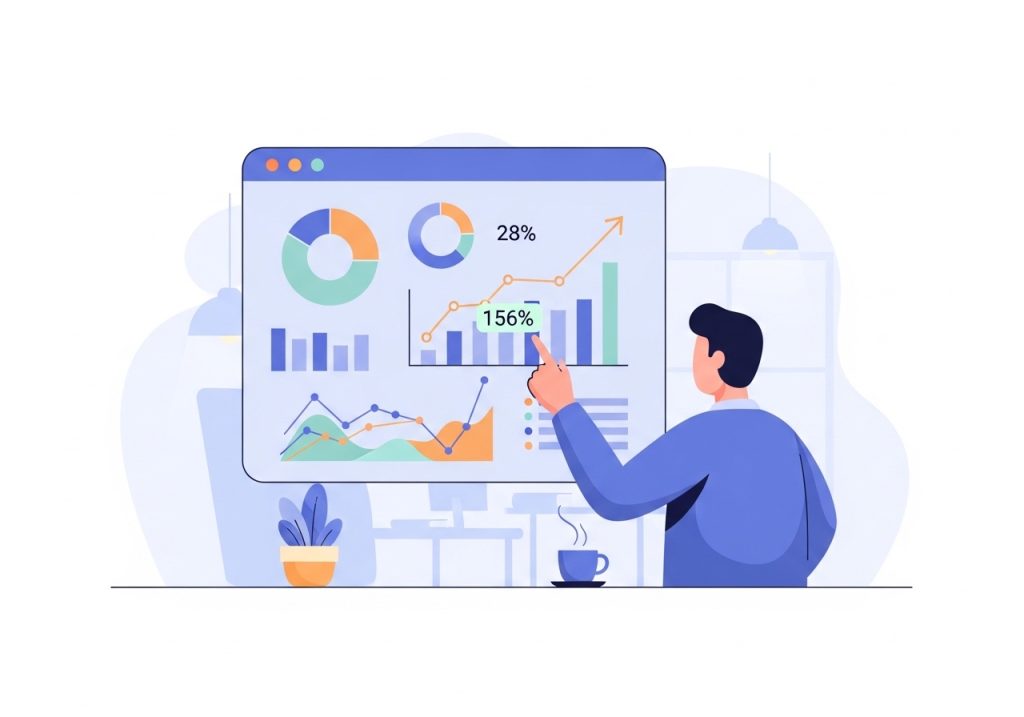
Continuously track key metrics like website traffic, conversion rates, and cost per acquisition. Use this data to refine your strategies and optimize your marketing spend for better results. The only way to know if your promotional efforts are working is to measure them. This data-driven approach allows you to double down on what is successful and adjust or eliminate what is not.
Use tools like Google Analytics to monitor website traffic, user behavior, and goal completions. For paid campaigns, all ad platforms provide detailed dashboards to track metrics like click-through rates (CTR), cost per click (CPC), and conversion rates. Set up regular reporting to review these metrics and identify trends. This analysis will reveal which channels are driving the most value and where there are opportunities for improvement. Successful business promotion is not about a single campaign but about a continuous cycle of implementation, measurement, and optimization.
Promoting your business is an ongoing process, not a one-time project. By following these steps, you can build a comprehensive strategy that integrates content, email, social media, and paid advertising into a cohesive marketing system. The key is to start with clear goals, understand your audience deeply, and consistently measure your results to refine your approach. A strategic, data-informed promotional plan is the foundation for sustainable business growth.
Ready to put your content marketing on autopilot? Ascend fully automates your blog, from keyword research and content creation to daily publishing inside WordPress. Save countless hours and grow your organic traffic without the manual effort. See how Ascend can transform your content strategy by learning more about our automated content engine.

Written by
Ascend
Ascend is an automated SEO engine for WordPress. It handles keyword research, writes high-quality, search-optimized content, and publishes it directly to your site, so your traffic can grow on autopilot. Learn more