
What Is Automatic Writing and How Does It Scale Content?
Automatic writing is the process of using artificial intelligence to generate text based on specific inputs, enabling marketing teams and agencies to produce high-quality content at scale. While the term once referred to a practice of writing without conscious thought, its modern definition is rooted in technology that transforms content creation from a manual task into an automated workflow. For busy SaaS companies and marketing agencies, this shift is critical for maintaining a consistent publishing cadence and scaling organic growth efforts efficiently.
Understanding the Core Technology of Automatic Writing
At its heart, contemporary automatic writing is powered by advanced AI, specifically Large Language Models (LLMs). These models are trained on vast amounts of text data, allowing them to understand context, grammar, tone, and nuance. Unlike older article spinners that simply replaced words with synonyms and produced nonsensical content, today’s modern AI content creation tools generate original, coherent, and valuable articles.
The term itself has historical roots, originating with practices tied to spiritualism and later adopted by the Surrealist art movement as a creative technique. Artists like André Breton used it to explore the subconscious mind. However, in today’s digital marketing context, AI-powered writing is a form of automated content creation designed for strategic business goals. The process is not random, it is highly structured. An effective automatic writing platform operates by:
- Analyzing Brand Guidelines: The AI first learns a company’s unique voice, tone, products, and target audience. This ensures all generated content is on-brand.
- Processing Data Inputs: It takes specific instructions, such as a target keyword, a topic cluster, or an article outline, to guide the content generation.
- Generating Human-Like Text: Using its training, the LLM constructs sentences and paragraphs that are logically structured and easy to read.
- Optimizing for Search Engines: Advanced systems integrate SEO best practices directly into the writing process, including keyword placement, internal linking, and meta descriptions.
This technological foundation means that automatic writing is no longer a simple replacement for a writer. Instead, it acts as a powerful engine for a comprehensive content strategy, executing the repetitive parts of content production so human teams can focus on higher-level planning and creativity.
The Strategic Advantage of Automatic Writing for Marketing Teams
For marketing agencies, SaaS companies, and creator platforms, the primary challenge in content marketing is rarely a lack of ideas. It is almost always a lack of time and resources to execute those ideas consistently. Automatic writing directly addresses this bottleneck, offering several significant strategic advantages that support sustainable growth.

The main benefits include:
- Massive Scalability: Manually writing a high-quality blog post can take hours, if not days, of research, drafting, and editing. An automatic writing platform can produce a complete, optimized article in minutes. This allows a small team to manage a content calendar that would otherwise require several full-time writers, making it a cornerstone of an affordable SEO strategy.
- Unwavering Consistency: Search engines reward websites that publish fresh, relevant content on a regular schedule. Yet, maintaining a daily or even weekly publishing cadence is a huge operational burden. Automation ensures the content pipeline never runs dry, helping build topical authority and improve search rankings over time.
- Improved Team Efficiency: When content generation is automated, your marketing team is free to focus on tasks that require human ingenuity. They can spend more time on campaign strategy, client communication, performance analysis, and creative development, rather than getting stuck in the weeds of drafting blog posts.
- Enhanced Content Quality Control: A well-configured automatic writing system works from a set of established brand and style guidelines. This reduces the risk of off-brand messaging, inconsistent tone, or factual errors that can occur with a large team of freelance writers. It centralizes control and ensures every piece of content meets a predefined standard.
Integrating an Automatic Writing Workflow into Your Strategy
Implementing an automatic writing system is not about replacing your content strategy, but rather supercharging it. The right platform integrates seamlessly into your existing marketing operations, turning a series of manual steps into a streamlined, hands-off workflow. A typical integrated process looks something like this.
First, the system connects directly with your content management system, such as WordPress. This allows it to understand your existing content, site structure, and brand voice. From there, the workflow is automated:
- Strategic Research and Planning: The tool performs keyword research based on your business goals and analyzes competitors. It then uses this data to generate a strategic, 30-day content calendar complete with topics designed to attract your target audience and rank for valuable search terms.
- Automated Content Generation: Each day, the system automatically writes a full blog post based on the approved calendar. This includes crafting a compelling title, structuring the article with logical headings, and writing informative body content that aligns with your brand’s tone.
- Intelligent Optimization: As it writes, the platform integrates crucial on-page SEO elements. It adds relevant internal links to your other posts, incorporates the target keyword naturally, and can even integrate with SEO plugins to manage meta titles and descriptions.
- Image Creation and Formatting: Modern platforms can also generate on-brand images to accompany each post, ensuring the content is visually appealing and ready to publish without manual intervention.
- Scheduled Publishing: Finally, the completed and optimized article is automatically published to your blog at a predetermined time. The entire process, from ideation to publication, happens without requiring daily input from your team.
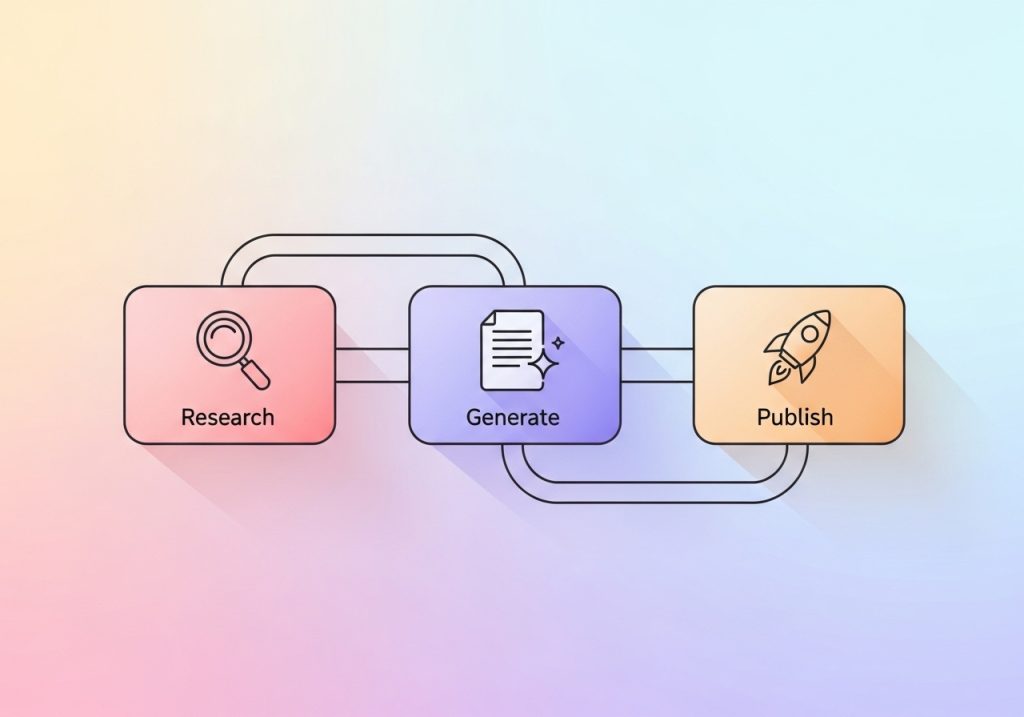
This end-to-end automation allows marketing teams to manage their entire blog strategy directly from their WordPress dashboard, transforming content creation into a manageable and predictable growth engine.
Evaluating Automatic Writing Platforms: Key Features to Look For
Not all automatic writing tools are created equal. As the technology has become more accessible, the market has filled with a wide range of solutions, from simple text generators to fully autonomous content platforms. When evaluating a tool for your agency or SaaS business, it is important to look beyond just the ability to generate words and consider the features that drive real business results.
Here are the key criteria to consider:
- Output Quality and Originality: The most important factor is the quality of the generated text. Does it read like it was written by a human? Is it factually accurate, grammatically correct, and free of plagiarism? Request samples or use a trial to assess the output before committing.
- Native WordPress Integration: A tool that operates directly within your WordPress dashboard is far more efficient than one that requires you to copy and paste content from an external app. Native integration streamlines publishing, internal linking, and management, saving significant time.
- End-to-End Automation: Look for a solution that handles the entire content lifecycle. This includes keyword research, content calendar creation, drafting, image generation, optimization, and publishing. A tool that only does one of these things still leaves a significant manual workload for your team.
- Built-in SEO Capabilities: Effective content needs to be discoverable. The platform should have SEO at its core, helping with everything from topic selection to on-page optimization. It should understand how to use keywords effectively and how to structure content for search engines, much like dedicated on-page optimization tools.
- Brand Customization: Your brand has a unique voice. The AI should be able to learn and adapt to it. A good platform will analyze your existing content and allow you to provide specific guidelines to ensure every article it produces sounds like it came from you.
By prioritizing these features, you can select an automatic writing platform that functions as a true strategic partner, not just a simple writing assistant. The goal is to automate the labor, not the strategy, allowing your team to achieve more with less effort.
Ready to put your content marketing on autopilot? Ascend is the only fully automated AI content creation tool built for WordPress. It handles everything from keyword research and calendar planning to writing, optimizing, and publishing a high-quality blog post every single day. Stop spending hours on content and start scaling your organic traffic. Learn how Ascend can transform your content strategy.

Written by
Ascend
Ascend is an automated SEO engine for WordPress. It handles keyword research, writes high-quality, search-optimized content, and publishes it directly to your site, so your traffic can grow on autopilot. Learn more