
What Is ICP Marketing? A Guide for Agencies and SaaS
ICP marketing is a strategy that focuses all your sales and marketing resources on a specific, well-defined set of high-value target accounts. Instead of casting a wide net, this approach allows SaaS companies and marketing agencies to concentrate their efforts on prospects that are most likely to buy, succeed, and become long-term partners. It all starts with creating an Ideal Customer Profile (ICP), a detailed description of the perfect company for your product or service.
What Exactly is an Ideal Customer Profile (ICP)?
An Ideal Customer Profile, or ICP, is a detailed description of a fictional company that gets the most value from your solution and, in turn, provides the most value to your business. Think of it as a blueprint for the perfect client. This isn’t just about who *can* use your product; it’s about who *should* use it for maximum mutual benefit. According to Salesforce, an ICP defines a perfect-fit buyer for your offerings.
It’s important to distinguish an ICP from a buyer persona. They work together, but they are not the same thing.
- Ideal Customer Profile (ICP): This focuses on the company level. It includes firmographic data like industry, company size (both revenue and employee count), geographical location, budget, and the technology stack they use. It answers the question, “What kind of company is the best fit for us?”
- Buyer Persona: This focuses on the individual people within those ideal companies. It includes details like job titles, responsibilities, pain points, goals, and communication preferences. It answers the question, “Who are the specific people we need to convince at our target company?”
For example, if your company sells project management software, your ICP might be a marketing agency with 50-200 employees located in North America. Your buyer personas within that agency could be the “Marketing Director” who needs to see team efficiency and the “Project Manager” who needs a tool to manage daily tasks.
Why ICP Marketing is Essential for Predictable Growth
Adopting an ICP-driven strategy does more than just refine your targeting. It creates a ripple effect of efficiency and effectiveness across your entire organization. When everyone from marketing to sales to product development understands who the ideal customer is, efforts become aligned and resources are spent more wisely.
Here are some of the primary benefits:
- Higher Marketing ROI: When you know exactly who you’re talking to, you can stop wasting money on advertising and content that reaches the wrong audience. Your ad spend becomes more efficient, and your messaging resonates more deeply, leading to higher-quality leads at a lower cost.
- Shorter Sales Cycles: Sales teams armed with a clear ICP can quickly qualify leads and prioritize their outreach. They spend less time on prospects who are a poor fit and more time building relationships with accounts that are likely to close.
- Increased Customer Lifetime Value (LTV): Customers that fit your ICP are more likely to be successful with your product. They experience fewer frustrations, require less support, and are more inclined to renew their subscriptions and purchase additional services. This leads directly to lower churn and higher LTV.
- More Effective Product Development: Your ICP tells your product team who they are building for. This clarity helps them prioritize features and improvements that solve real problems for your most valuable customers, strengthening your product-market fit.
- Aligned Sales and Marketing Teams: An ICP serves as a common language for sales and marketing. Marketing can focus on generating qualified leads that match the profile, and sales receives prospects they are eager to engage, eliminating friction between the two departments.
How to Build Your Ideal Customer Profile from Data
Creating a powerful ICP is a data-driven exercise, not a guessing game. It requires looking inward at your existing customer base to find patterns and characteristics that define success. Avoid the temptation to build your profile based on assumptions or who you *wish* your customer was.
Step 1: Identify Your Best Current Customers
Start by making a list of your top 10-20 customers. “Best” can be defined by several factors:
- High Lifetime Value (LTV): Who has spent the most with you over time?
- High Satisfaction: Look for customers with high Net Promoter Scores (NPS) or positive feedback.
- Low Churn Risk: These are your loyal, long-term partners.
- Successful Onboarding: Which customers got up and running with your product the fastest?
- Brand Advocates: Who refers new business or provides great testimonials?
Once you have this list, you have your data set for analysis.
Step 2: Collect Quantitative Data
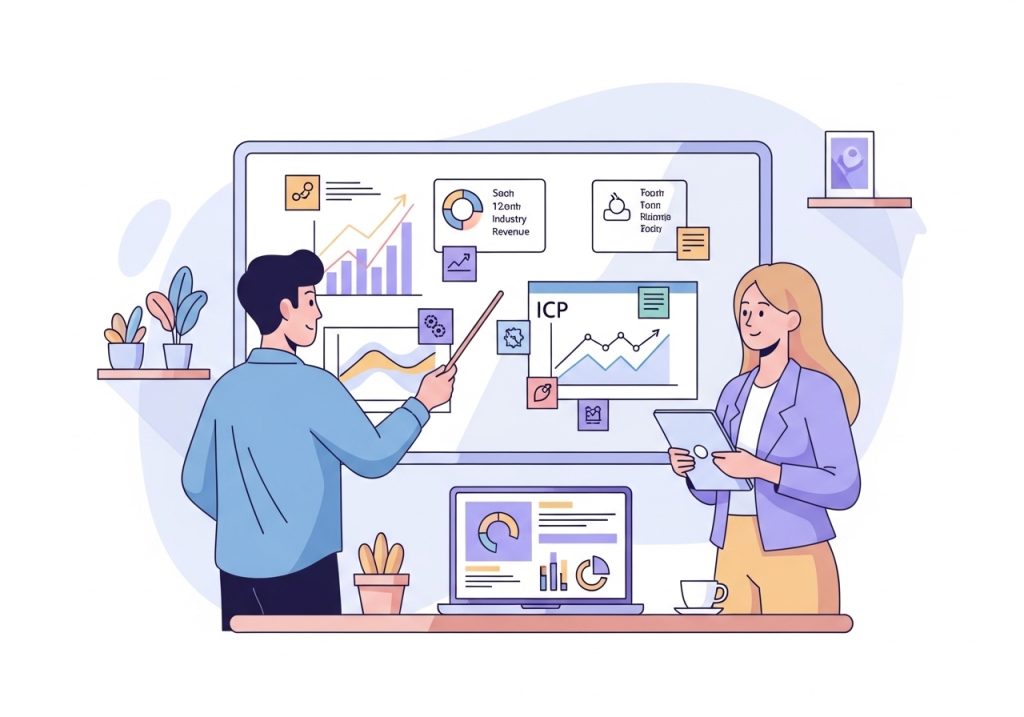
For each customer on your “best” list, gather firmographic and technographic data. Look for common threads across these attributes. As noted by industry tools like Apollo.io, your ICP should define the specific type of company most likely to buy and stay. Key data points include:
- Industry or Vertical: Are they mostly in SaaS, ecommerce, or healthcare?
- Company Size: What is their typical employee count and annual revenue?
- Geography: Are they concentrated in a specific country or region?
- Technology Stack: What other software do they use (e.g., Salesforce, HubSpot, Shopify)? This can indicate technical maturity and integration possibilities.
- Budget: While harder to find, you can often estimate budget based on company size and spending patterns.
Step 3: Gather Qualitative Insights
Data tells you the “what,” but conversations tell you the “why.” Conduct interviews with stakeholders who interact with your best customers, including sales reps, account managers, and customer support staff. If possible, interview the customers themselves.
Ask questions like:
- What challenges were they facing before they found our solution?
- What was their “aha!” moment with our product?
- What specific results have they achieved?
- What does their decision-making process look like?
These qualitative insights add color and context to your data, helping you understand the human motivations behind the purchase.
Step 4: Synthesize and Document Your ICP
Combine your quantitative and qualitative findings into a concise, shareable document. It should be a clear, simple summary that anyone in your company can understand and use. List the key attributes and write a short narrative paragraph describing the ideal customer company. Circulate this document and ensure it becomes the single source of truth for all customer-facing teams.
Activating Your ICP Marketing Strategy
An ICP document is useless if it just sits in a folder. The real value comes from putting it into action across all your marketing and sales activities. A focused ICP allows you to refine your entire go-to-market motion.
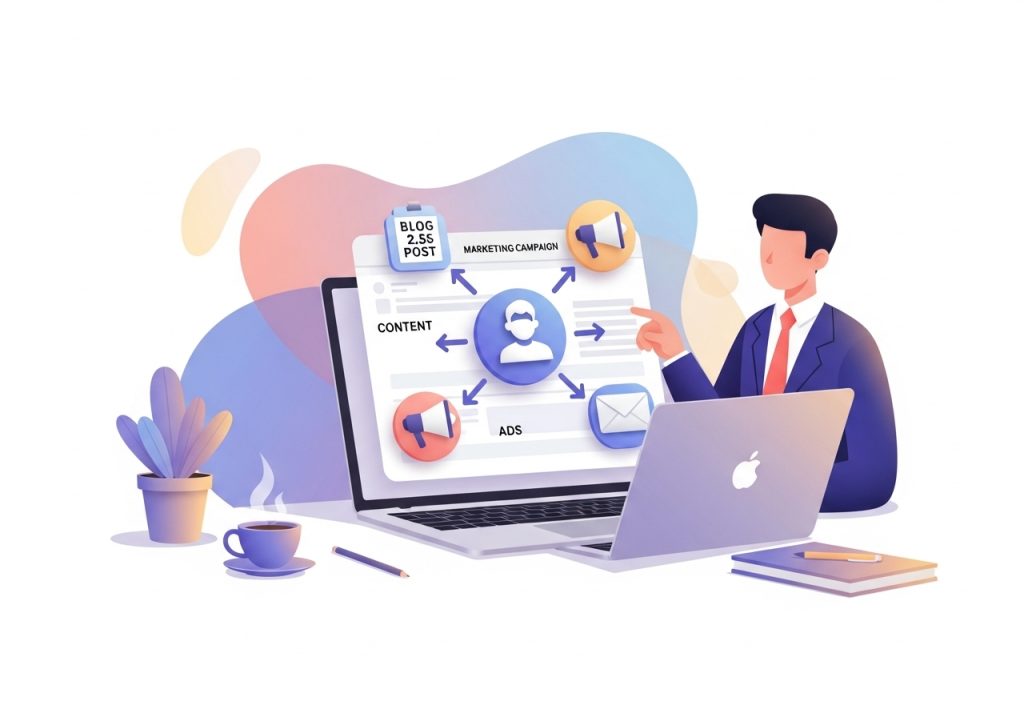
- Targeted Content Creation: Your ICP’s challenges should directly inform your content calendar. Create blog posts, ebooks, and webinars that address their specific pain points and offer solutions. When you know who you are writing for, you can create more compelling material. This is where tools that streamline your workflow, like those using content automation, can help you scale your efforts effectively.
- Paid Advertising Precision: On platforms like LinkedIn, you can use your ICP criteria to build hyper-targeted ad audiences. Filter by industry, company size, job function, and more to ensure your ads are only seen by relevant prospects. This dramatically improves your return on ad spend.
- Account-Based Marketing (ABM): Your ICP is the foundation of any ABM campaign. It allows you to build a list of target accounts that are a perfect fit. From there, you can create personalized outreach and marketing campaigns designed for those specific companies.
- Sales Outreach Personalization: Your sales team can use the ICP to personalize their emails and calls. Instead of generic messages, they can reference industry-specific challenges or goals, making their outreach far more effective.
Common Pitfalls to Avoid with Your ICP
As you develop and implement your ICP, be mindful of a few common mistakes that can undermine its effectiveness.
- Relying on Gut Feelings: The most significant error is creating an ICP based on assumptions instead of hard data. Every attribute in your profile should be backed by evidence from your customer base.
- Being Too Broad or Too Niche: An ICP that is too broad (e.g., “all software companies”) isn’t actionable. Conversely, one that is too narrow (e.g., “B2B SaaS companies in Austin with exactly 42 employees”) can unnecessarily limit your potential market. Find the right balance.
- Forgetting to Revisit and Update: Markets change, your product evolves, and your ideal customer may shift over time. Treat your ICP as a living document. Review and refresh it at least once a year to ensure it remains accurate.
- Ignoring “Negative” Profiles: It’s equally valuable to define who is *not* a good fit for your product. A negative ICP outlines the characteristics of customers who churn quickly, strain your support team, or complain frequently. This helps your team disqualify poor-fit leads early in the process.
ICP marketing is a foundational strategy for any B2B company looking for efficient, scalable growth. By focusing your energy on the companies that are best suited for your solution, you align your entire organization, improve your marketing ROI, and build a healthier, more sustainable business. The process requires data, analysis, and a commitment to action, but the rewards are well worth the effort.
Defining your ICP is the first step. The next is consistently creating high-quality content that speaks directly to their needs. Ascend automates your entire blog content strategy, from keyword research to publishing, right inside WordPress. Stop spending hours on manual content work and start attracting your ideal customers on autopilot. Learn how Ascend can scale your organic growth today.

Written by
Ascend
Ascend is an automated SEO engine for WordPress. It handles keyword research, writes high-quality, search-optimized content, and publishes it directly to your site, so your traffic can grow on autopilot. Learn more