
What Is SaaS Sales? A Complete Guide for Agencies and Tech Companies
The software industry has fundamentally shifted from one-time purchases to subscription-based models. This change requires a different approach to selling, one that prioritizes long-term relationships over single transactions. For agencies and tech companies, understanding this process is critical for growth. So, what is SaaS sales? It’s a specialized methodology focused on selling web-based software subscriptions, built around recurring revenue, customer retention, and continuous value delivery.
Step 1: Grasp the Core Definition of SaaS Sales
SaaS (Software as a Service) sales is the entire process of selling access to cloud-hosted software. Instead of a customer buying a license to own a piece of software forever, they pay a recurring fee, usually monthly or annually, for access to the service. This model changes everything about the sales process. The initial sale is just the beginning of the customer relationship, not the end.
The primary goal is not just to acquire a new customer but to retain them for as long as possible. This focus on retention makes customer success an integral part of the sales cycle. A successful SaaS sales team understands that their work continues long after the initial contract is signed. They must ensure the customer consistently finds value in the product, which prevents churn and opens opportunities for upselling or cross-selling.
Step 2: Differentiate SaaS Sales from Traditional Sales
While both SaaS and traditional sales aim to generate revenue, their methods and priorities differ significantly. Traditional sales often follows a linear path that ends with the purchase. Think of buying a car or a physical copy of software; once the transaction is complete, the direct sales relationship is mostly over.
SaaS sales, however, is cyclical and relationship-driven. The subscription model means the customer can choose to stop paying at any time. This reality forces SaaS companies to continuously prove their product’s worth. The sales cycle is shorter, but the customer lifecycle is much longer and more important. Key differences include a greater emphasis on customer lifetime value (LTV) over single-deal size, a focus on metrics like monthly recurring revenue (MRR), and a tight alignment between sales, marketing, and customer success teams.
Step 3: Map the Common SaaS Sales Funnel
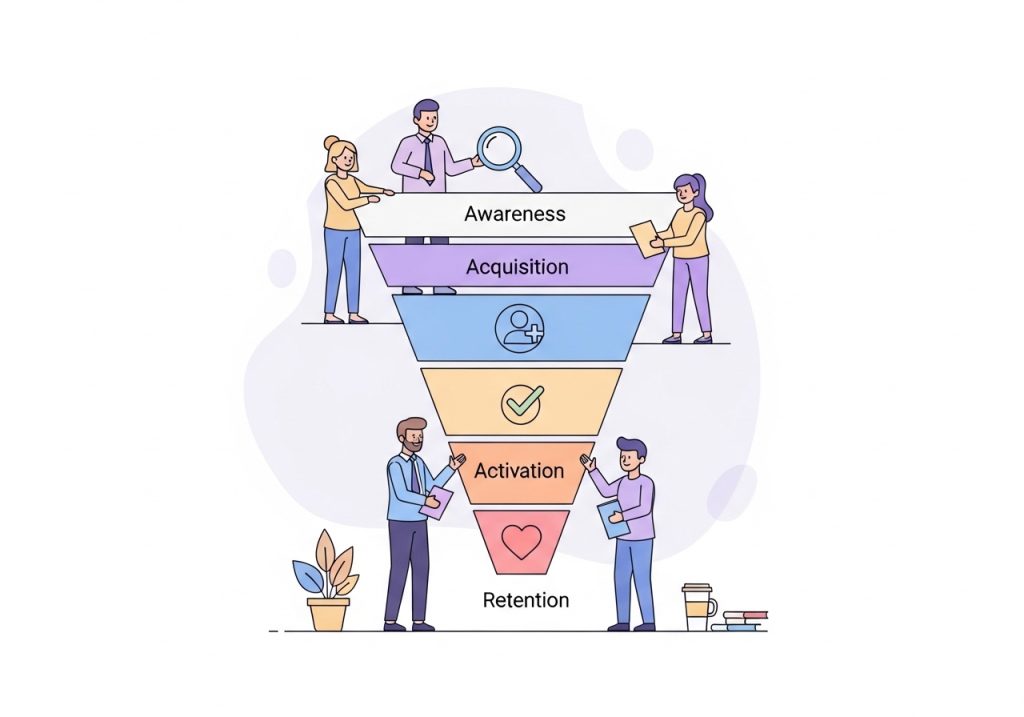
The SaaS sales funnel guides a prospect from initial awareness to becoming a loyal, paying customer. While funnels can be customized, they generally follow a few core stages. Properly conducting thorough market research is essential to understand the customer journey through these stages.
- Awareness: At the top of the funnel, potential customers become aware of a problem they have and discover your product as a possible solution. This stage is heavily driven by content marketing, SEO, and advertising.
- Acquisition: A prospect shows interest by taking an action, such as signing up for a free trial, requesting a demo, or downloading a resource. They are now a lead.
- Activation: The lead begins using the product and experiences its core value for the first time. This “aha moment” is critical for converting them into a paying customer.
- Retention: Once a customer, the focus shifts to keeping them happy and engaged. Excellent customer support, new feature updates, and proactive communication help reduce churn and build loyalty.
Step 4: Identify Key SaaS Sales Models
Not all SaaS products are sold the same way. The right sales model depends on the product’s price, complexity, and target customer. Most companies use one of three primary models or a hybrid approach.
Self-Service Model
In this low-touch model, customers sign up and start using the product with little to no interaction with a salesperson. The product itself does the selling. This approach works best for low-priced, high-volume products that are easy to understand and adopt. Companies like Slack and Calendly are excellent examples. The focus here is on product-led growth, where a seamless user experience drives acquisition and conversion.
Transactional Sales Model
This model involves more interaction from a sales team. It’s suited for products with a moderate price point that might require some guidance or a demo to understand fully. An inside sales team typically manages a high volume of leads, working to qualify them and guide them through the sales process. The sales cycle is relatively short, often lasting a few weeks. This is a common model for many B2B SaaS tools.
Enterprise Sales Model
The enterprise model is a high-touch, complex process for selling high-value, sophisticated solutions to large organizations. Sales cycles are long, often lasting several months, and involve multiple stakeholders. Dedicated account executives build deep relationships, conduct extensive discovery, and tailor solutions to meet specific client needs. This model requires a highly skilled sales team and is used for products with a high annual contract value (ACV).
Step 5: Master the Essential Sales Metrics
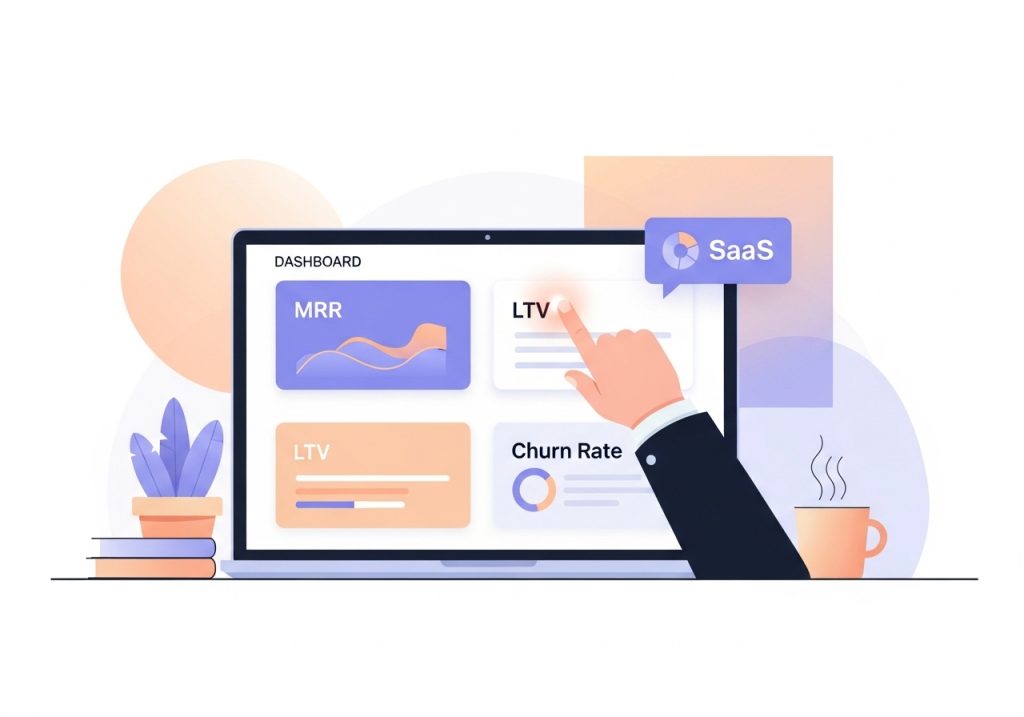
SaaS sales is a data-driven field. To build a predictable revenue engine, you must track the right metrics. These key performance indicators (KPIs) provide insight into the health of your sales process and overall business.
Monthly Recurring Revenue (MRR) and Annual Recurring Revenue (ARR)
MRR is the predictable revenue a company can expect to receive every month. ARR is the same metric but annualized. These are the most fundamental metrics for any subscription business, as they represent the lifeblood of the company.
Customer Lifetime Value (LTV)
LTV is the total revenue you can expect to generate from a single customer over the entire duration of their relationship with your company. A high LTV indicates that you are retaining valuable customers who continue to see worth in your product.
Customer Acquisition Cost (CAC)
CAC is the total cost of sales and marketing efforts required to acquire a new customer. A healthy SaaS business model requires that the LTV is significantly higher than the CAC. A common benchmark is an LTV:CAC ratio of 3:1 or higher.
Churn Rate
Churn is the percentage of customers who cancel their subscriptions in a given period. High churn can cripple a SaaS company, as it forces you to acquire new customers just to maintain your current revenue level. Keeping churn low is a top priority.
Step 6: Integrate Content Marketing into Your Sales Process
In the SaaS world, sales and marketing are deeply intertwined. Content marketing, especially through a company blog, plays a critical role in filling the top of the sales funnel. By creating effective SEO content, you can attract prospects who are actively searching for solutions to their problems. This content establishes your company as a trusted authority in your industry.
Well-crafted blog posts, guides, and case studies educate potential customers, answer their questions, and build trust long before they ever speak to a salesperson. This educational approach helps qualify leads, as prospects who engage with your content arrive better informed and more prepared for a sales conversation. Once you have this valuable content, you can promote your blog to a wider audience through various channels to maximize reach. Consistently publishing high-quality content keeps your brand top-of-mind and fuels a steady stream of inbound leads for your sales team.
Understanding what SaaS sales is involves more than learning a new set of terms. It requires a shift in mindset from short-term wins to long-term value creation. By differentiating it from traditional methods, mapping your sales funnel, choosing the right model, and tracking key metrics, you can build a scalable and sustainable growth engine. This process, supported by a strong content strategy, allows you to attract the right customers and build lasting relationships that drive predictable revenue.
Fueling your SaaS sales funnel requires a constant stream of high-quality content. Ascend automates your entire blog content strategy, from keyword research to daily publishing inside WordPress. Let our AI handle the content creation, so your team can focus on building relationships and closing deals. Discover how Ascend can help you grow organic traffic and generate leads automatically.

Written by
Ascend
Ascend is an automated SEO engine for WordPress. It handles keyword research, writes high-quality, search-optimized content, and publishes it directly to your site, so your traffic can grow on autopilot. Learn more