
A Practical Guide to Behavioral Segmentation Marketing
Traditional marketing often groups customers by demographics like age, location, or gender. While useful, this approach overlooks a more powerful indicator of intent: behavior. Understanding what customers do is more predictive than knowing who they are. This is the core principle behind behavioral segmentation marketing, a strategy that categorizes audiences based on their actions, interactions, and patterns of engagement with your brand. By focusing on behavior, you can create more relevant, personalized, and effective campaigns that resonate with your customers’ actual needs and motivations.
What Is Behavioral Segmentation?
Behavioral segmentation is the practice of dividing your total market into smaller, homogeneous groups based on their observed behaviors. Instead of relying on static traits, this method looks at dynamic data points such as purchasing habits, product usage frequency, website interactions, and loyalty status. Think of it like a barista who notices which customers always order a black coffee, which ones only visit for the seasonal specials, and which ones come in every day for the same latte. The barista can use this knowledge to offer a better, more personalized experience.
This approach differs significantly from other segmentation types:
- Demographic Segmentation: Groups customers by age, gender, income, or occupation.
- Geographic Segmentation: Groups customers by country, city, or climate.
- Psychographic Segmentation: Groups customers by lifestyle, values, or personality traits.
While these methods provide a basic profile, behavioral segmentation answers critical questions about engagement. It helps you understand not just who your customers are, but how they interact with your business, what they value, and what drives their decisions.
Key Types of Behavioral Segmentation
To apply this strategy effectively, you can group customer behaviors into several key categories. Each type offers a different lens through which to view your audience, allowing for more precise targeting.

Purchase Behavior
This is one of the most common types of behavioral segmentation. It involves analyzing how customers act during the buying process. You can create segments based on:
- Purchase Frequency: Do they buy often or rarely?
- Average Order Value (AOV): Are they high-spenders or budget-conscious shoppers?
- Product Category: Which types of products or services do they prefer?
- Timing: Do they buy during specific seasons, holidays, or sales events?
For example, an e-commerce client might have segments for “loyal customers” who buy monthly, “bargain hunters” who only purchase during sales, and “one-time buyers” who need nurturing to return.
Usage Behavior
This category is especially valuable for SaaS companies and subscription-based services. It segments users based on how they interact with your product or service. Key metrics include:
- Usage Rate: Are they heavy, moderate, or light users?
- Feature Adoption: Which features do they use most, and which do they ignore?
- Login Frequency: How often do they access their account?
- Time Spent: How long are their sessions?
A SaaS platform could segment users into “power users,” “occasional users,” and “at-risk users” who have low engagement. Each group requires a different communication strategy to maximize value and prevent churn.
Benefits Sought
This type of segmentation groups customers based on the primary value or benefit they are looking for in a product. People can buy the same product for very different reasons. For instance, someone buying a project management tool might be looking for increased personal productivity, while another user from the same company seeks better team collaboration. Understanding these underlying motivations allows you to tailor your messaging to highlight the specific benefits each segment values most.
Customer Journey Stage
Customers interact with your brand differently depending on where they are in their journey. Segmenting by this stage ensures you deliver the right message at the right time. Common stages include:
- Awareness: The prospect is aware of a problem but may not know about your solution.
- Consideration: The prospect is researching different options to solve their problem.
- Decision: The prospect is ready to buy and is comparing final contenders.
- Retention: The customer is using your product and you want to ensure their loyalty.
- Advocacy: The customer is a loyal fan who promotes your brand to others.
Why Behavioral Segmentation Marketing Matters for Growth
Adopting a behavioral segmentation marketing strategy offers clear advantages for agencies, SaaS companies, and other businesses focused on growth. By moving beyond simple demographics, you can build a more resilient and effective marketing engine.
Deeper Personalization
Behavioral data allows you to personalize content, offers, and communications with a high degree of accuracy. Instead of sending a generic newsletter to everyone, you can send an upgrade offer to a power user, a tutorial video to a new user, or a special discount to a customer who abandoned their cart. This relevance makes customers feel understood and increases engagement.
Higher Conversion Rates
Personalized marketing directly impacts conversions. When your messaging aligns with a user’s recent actions or interests, they are much more likely to take the desired next step. A well-timed email reminding a trial user of a feature they haven’t tried can be the nudge they need to become a paying customer. This precise targeting leads to a more efficient sales funnel.
Improved Customer Retention
It costs more to acquire a new customer than to retain an existing one. Behavioral segmentation helps you identify at-risk customers before they leave. By monitoring usage patterns, you can detect a drop in engagement and proactively reach out with support, special offers, or helpful content to win them back. It also helps you identify your most loyal customers, so you can reward them and turn them into brand advocates.
How to Implement a Behavioral Segmentation Strategy
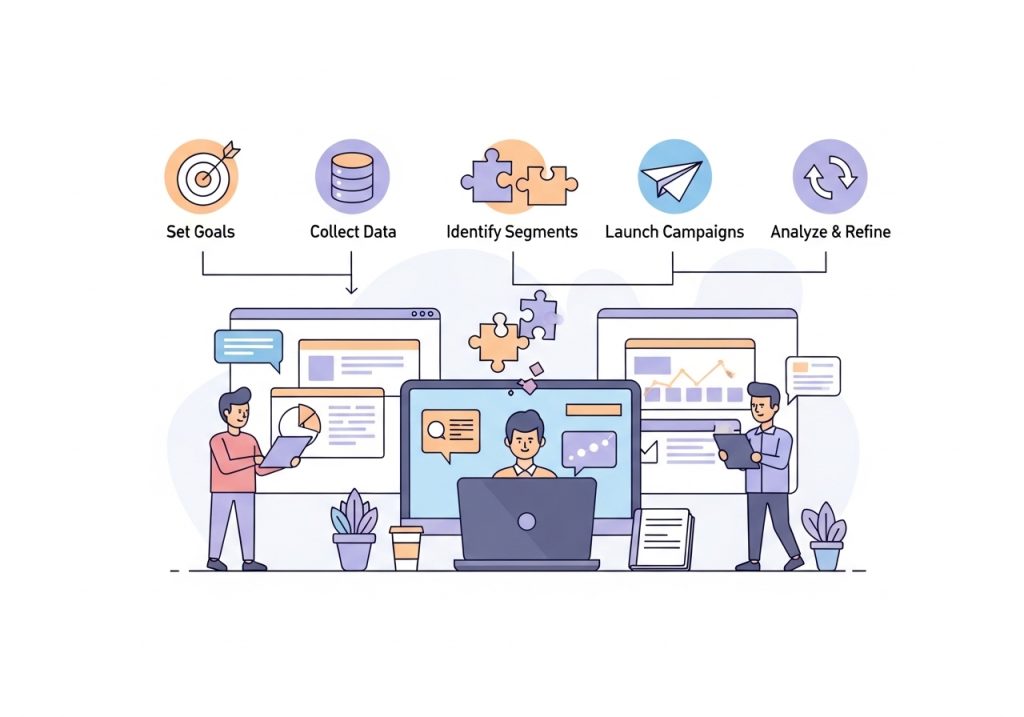
Getting started with behavioral segmentation is a systematic process. It involves setting clear goals, gathering the right information, and continuously refining your approach.
Step 1: Set Clear Goals
Start by defining what you want to achieve. Do you want to reduce customer churn, increase the average order value, improve feature adoption, or convert more trial users? Your goals will determine which behaviors are most important to track.
Step 2: Collect Relevant Data
You need to gather data from various touchpoints. Key sources include your website analytics (e.g., Google Analytics), CRM system, e-commerce platform, marketing automation software, and product usage data. Strong marketing information management is essential for consolidating this data into a usable format.
Step 3: Identify Key Segments
Analyze the collected data to find meaningful patterns and create distinct segments. For example, you might identify a group of users who frequently browse high-value products but never purchase, or another group that uses a single core feature but ignores all others. Give each segment a descriptive name to make them easy to work with.
Step 4: Build and Launch Targeted Campaigns
With your segments defined, create campaigns tailored to each one. This could involve customized email sequences, targeted ads, personalized website content, or in-app messages. The content of each campaign should speak directly to the behaviors and motivations of that specific segment.
Step 5: Analyze and Refine
Behavioral segmentation is not a one-time project. Continuously monitor the performance of your campaigns and the behavior of your segments. Customer needs change, and your segments may evolve over time. Use A/B testing and performance data to refine your segments and campaign strategies for better results.
Practical Examples for Agencies and SaaS Companies
To see how this works in practice, consider these scenarios for Ascend’s target audience:
For a Marketing Agency
An agency managing an e-commerce client could use behavioral segmentation to increase customer lifetime value. They could create a segment of “VIP Customers” who have a high purchase frequency and AOV. This group would receive exclusive access to new products, special loyalty rewards, and personalized thank-you messages. Meanwhile, a “Window Shoppers” segment (users who frequently add items to their cart but don’t check out) could be targeted with remarketing ads and cart abandonment emails offering a small discount.
For a SaaS Company
A SaaS company can use usage data to drive both retention and expansion revenue. They could identify “Trial Users” who have activated key features and send them case studies and testimonials to encourage conversion before the trial ends. For existing customers, they could create a segment of “Power Users” who are using the platform to its full potential. This group could be targeted with offers for premium add-ons or invited to a customer advisory board, strengthening the relationship and improving the SaaS sales process for upsells.
Behavioral segmentation is a powerful strategy that shifts the focus from assumptions to actions. By understanding what your customers do, you can deliver more relevant experiences that drive conversions, build loyalty, and support sustainable growth. This customer-centric approach is no longer a luxury, it is a necessity for any business that wants to connect with its audience in a meaningful way.
Creating tailored content for multiple customer segments is a significant amount of work. Ascend automates your entire content strategy, from keyword research to daily publishing, right inside WordPress. If you want to scale your content marketing and connect with every audience segment without the manual effort, see how Ascend can help.

Written by
Ascend
Ascend is an automated SEO engine for WordPress. It handles keyword research, writes high-quality, search-optimized content, and publishes it directly to your site, so your traffic can grow on autopilot. Learn more