
A Practical Guide to Using AI for Content Creation
Using AI for content creation involves leveraging artificial intelligence to automate and assist in producing written and visual materials, from initial topic research to final publication. For marketing agencies and SaaS companies, this technology provides a way to scale high-quality content production, maintain brand consistency, and improve search engine performance without a proportional increase in manual effort. By integrating AI into a structured workflow, teams can focus more on strategy and less on the repetitive tasks of writing, editing, and publishing.
What is AI for Content Creation?
AI for content creation is more than just generating text. It encompasses a range of activities across the entire content lifecycle. Instead of viewing AI as a simple writing assistant, it’s more accurate to see it as a system that can manage complex, interconnected tasks. A comprehensive AI platform can support or fully automate several key stages of the content process.
These stages include:
- Strategy and Research: AI tools analyze search data to identify valuable keywords, group them into relevant topic clusters, and assess competitor content. This data-driven approach helps ensure that every piece of content is created with a clear purpose and a high potential for attracting organic traffic.
- Planning and Outlining: Based on the initial research, AI can generate detailed content calendars and create structured outlines for blog posts. This step provides a solid framework for writers, ensuring all essential points and keywords are included.
- Drafting and Writing: This is the most well-known application. AI generates a full first draft based on the outline and brand-specific instructions. Advanced systems can adapt their writing style to match an established brand voice.
- Image Generation: Modern AI platforms can create custom, on-brand images to accompany text. This eliminates the need for stock photos and ensures visual consistency across all published content.
- Optimization and Publishing: AI can handle final on-page SEO checks, add internal links to other relevant posts on your site, and integrate with content management systems like WordPress to automate the final publishing steps.
The goal of a modern AI content tool is to create a seamless flow from one stage to the next, reducing the manual handoffs that often slow down production.
Core Benefits for Agencies and SaaS Teams
For marketing agencies and SaaS companies, the pressure to produce a steady stream of high-quality content is constant. AI tools offer a practical solution to this challenge by delivering measurable improvements in efficiency and effectiveness. The primary benefits directly address the common pain points experienced by lean marketing teams.

- Increased Output and Efficiency: The most immediate benefit is the ability to produce more content in less time. Automating research, drafting, and publishing frees up marketers and writers to focus on higher-level strategic planning and creative direction.
- Enhanced Consistency: Maintaining a consistent brand voice, tone, and style across dozens or hundreds of articles is difficult. AI can be trained on your specific brand guidelines, ensuring every piece of content aligns with your company’s identity.
- Data-Informed Content Strategy: AI removes the guesswork from topic selection. By analyzing keyword data and search trends, AI helps you create content that your audience is actively looking for, which is a key part of any plan to increase organic traffic.
- Improved Scalability: Scaling content production traditionally requires hiring more writers and editors. With AI, you can significantly increase your publishing frequency without a linear increase in headcount, making growth more manageable and cost-effective.
- Better ROI on Content Marketing: By reducing the time and resources required to produce each article, AI lowers the overall cost of content marketing. This allows agencies and SaaS businesses to achieve a stronger return on investment from their organic marketing efforts.
How to Integrate AI into Your Content Workflow
Successfully adopting AI requires more than just subscribing to a tool. It demands a thoughtful integration into your existing processes. A well-planned approach ensures you get the most value from the technology while maintaining quality control. Building on the principles of a scalable content creation workflow, AI can automate many of the most time-consuming steps.
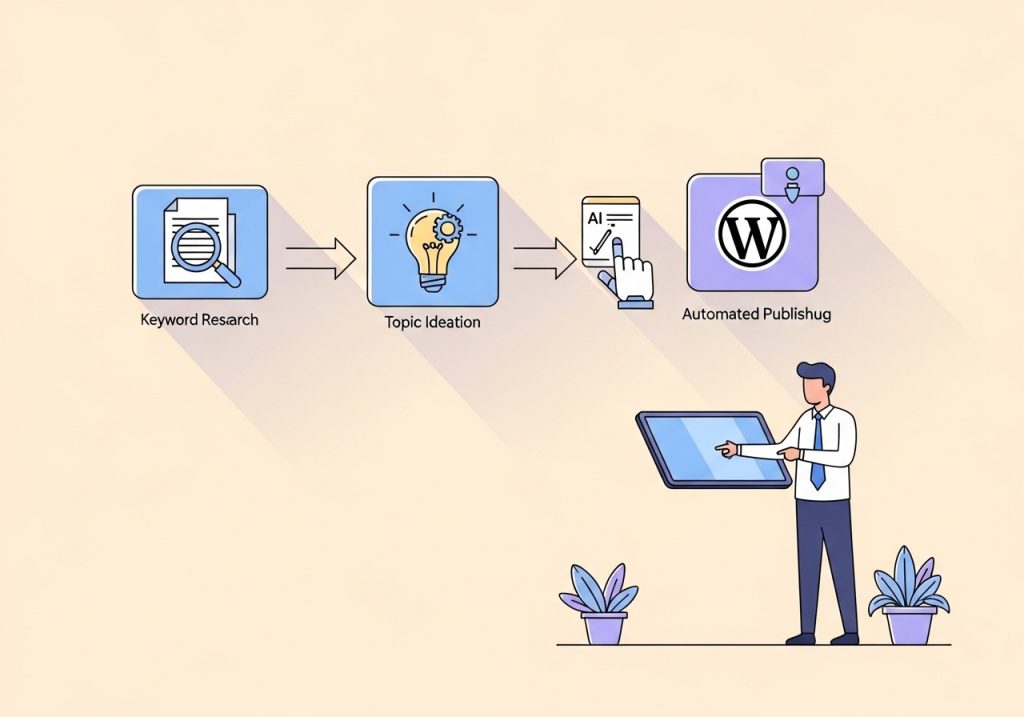
Here are key considerations for integration:
- Start with a Clear Goal: First, identify what you want to achieve. Are you trying to increase publishing velocity, improve keyword rankings, or free up your team for other tasks? Defining your primary objective will help you choose the right tool and measure its success.
- Establish Guidelines for Human Oversight: AI should be treated as a powerful assistant, not a replacement for human expertise. It’s important to establish clear checkpoints for human review and editing. As recommended by groups like the Authors Guild, human authors should verify all AI-generated output to ensure accuracy, originality, and adherence to brand standards.
- Train the AI on Your Brand Identity: The best AI tools allow for customization. Provide the system with your brand style guide, audience personas, and examples of your best-performing content. This training process helps the AI learn your unique voice and produce content that feels authentic.
- Automate the Full Publishing Process: Look for platforms that connect directly with your content management system. An AI tool that can perform keyword research, write a draft, generate an image, and publish it directly to your WordPress blog as a draft saves an enormous amount of administrative time.
Choosing the Right AI Content Platform
Not all AI content tools are created equal. Many platforms focus on a single task, like text generation, while others offer a more complete solution. For agencies and SaaS companies looking for maximum efficiency, a platform that handles the entire workflow is usually the best choice. A comprehensive approach is a fundamental part of a successful content marketing plan for agencies.
When evaluating different options, consider the following criteria:
- End-to-End Functionality: Does the tool manage the content lifecycle from keyword research to final publishing? A platform that combines strategy, writing, and automation in one place eliminates the friction of using multiple, disconnected tools.
- Native WordPress Integration: If your company blog runs on WordPress, a tool with a native integration is essential. This allows for true automation, including scheduling, category assignment, and integration with popular SEO plugins.
- Deep Brand Customization: Can the AI learn from your website, documentation, and style guides? A platform that deeply understands your brand will produce higher-quality, more relevant content right from the start.
- SEO and Strategy Features: The platform should do more than just write. Look for features like automated keyword research, topic clustering, competitive analysis, and internal linking suggestions to ensure your content is optimized for search performance.
- User-Friendly Interface: The tool should be intuitive enough for your entire team to use. A platform that operates directly within the WordPress dashboard, for example, reduces the learning curve and makes content management simpler.
Ultimately, the right platform is one that functions as a strategic partner. It should automate the repetitive work involved in content creation, freeing your team to focus on the creative and strategic elements that drive business growth.
Ready to stop spending hours on manual content tasks? Ascend fully automates your WordPress blog, from keyword research to publishing. See how you can get a month of high-quality SEO content, hands-free. Learn more about Ascend.

Written by
Ascend
Ascend is an automated SEO engine for WordPress. It handles keyword research, writes high-quality, search-optimized content, and publishes it directly to your site, so your traffic can grow on autopilot. Learn more