
How to Scale Content Marketing: A 5-Step Guide for Agencies and SaaS
To scale content marketing effectively, you must create a documented, repeatable system that standardizes every part of the process, from keyword research to final publication and distribution. Many teams believe scaling simply means hiring more writers or producing more articles, but this often leads to inconsistent quality, disjointed strategy, and diminishing returns. True scale comes from building an efficient content engine, not just adding more fuel. This guide outlines a five-step process that agencies, SaaS companies, and creator platforms can use to grow their organic traffic without letting quality or strategy suffer.
Step 1: Build a Scalable Content Operations System
Before you can increase output, you need a strong foundation. A content operations system is a set of documented processes that govern how your team produces content. It removes guesswork and ensures everyone follows the same high standards, whether you have two contributors or twenty. Start by creating Standard Operating Procedures (SOPs) for every major task. This includes keyword research, content brief creation, writing, editing, image sourcing, and on-page SEO. When your processes are clear and repeatable, you can maintain brand consistency even with a growing team.
Your system should also include a centralized content calendar, clear role definitions, and templates for key assets like content briefs and articles. When a new writer joins the team, they should be able to access these documents and understand exactly how to contribute. This documentation is the architecture of your content program, and it’s a critical part of building a scalable content system. It allows you to add new team members or freelancers with minimal friction and maintain quality control as you grow.
Step 2: Develop a Repeatable Keyword Research Process
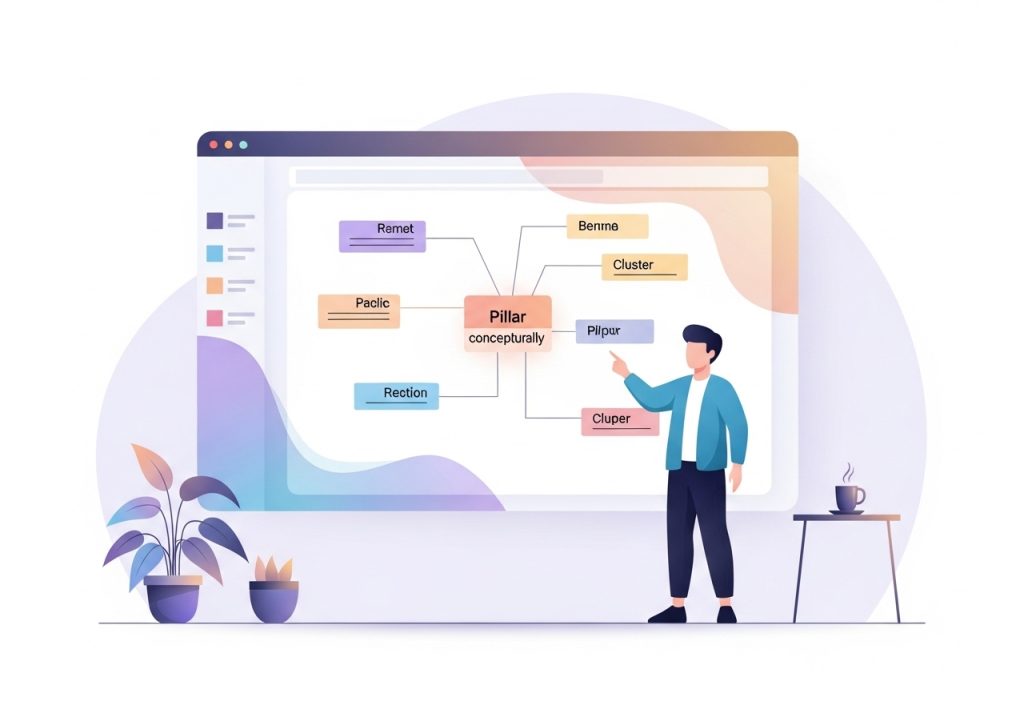
Effective content scaling depends on a steady stream of relevant topics. A haphazard approach to keyword research will not work when you need to plan content for weeks or months in advance. The solution is to systematize your research process. Focus on building topic clusters, which involve identifying a broad “pillar” topic and then creating multiple “cluster” articles that cover specific subtopics in greater detail. This approach helps establish topical authority with search engines and ensures your content plan is comprehensive, which in turn improves your overall SEO.
Create an SOP for your keyword research. Define which tools your team will use, what metrics to prioritize (like keyword difficulty and search volume), and how to organize findings. A shared database or spreadsheet can house potential keywords, their metrics, and their status (e.g., backlogged, in progress, published). This creates a predictable pipeline of vetted content ideas, allowing your team to focus on creation instead of constantly searching for the next topic.
Step 3: Standardize Your Content Creation Workflow
Consistency is key to quality at scale. A standardized workflow acts like an assembly line, moving a piece of content through distinct stages from ideation to publication. The most critical part of this workflow is the content brief. A great brief gives a writer everything they need to succeed: the target keyword, audience profile, key talking points, internal link suggestions, and competitor articles. Investing time in creating detailed briefs saves significant time during writing and editing and is essential for any team looking to scale production without sacrificing quality.
Define each stage of your workflow clearly. For example, a typical flow might be: Brief Creation -> First Draft -> Editorial Review -> Design/Image Creation -> SEO Optimization -> Final Approval -> Scheduling. Use a project management tool to track each article’s progress through these stages. This visibility prevents bottlenecks and helps you understand your team’s true production capacity, making it easier to forecast output and plan your content calendar accurately.
Step 4: Integrate AI and Automation Tools

This is how to scale content marketing with modern efficiency. Automation and AI can handle many of the time-consuming tasks that slow down your workflow. Using AI for content creation can accelerate keyword research, generate topic clusters, outline articles, and even write first drafts. This frees up your content strategists and writers to focus on higher-value activities like refining arguments, adding unique insights, and ensuring brand voice consistency.
Beyond writing, automation can streamline the entire publishing process. Some platforms can manage the entire content lifecycle, from generating a 30-day content calendar to automatically publishing a fully formatted blog post every day. These systems can handle image creation, internal linking, and integration with SEO plugins directly within your WordPress dashboard. By automating these repetitive tasks, you can significantly increase your publishing frequency without a proportional increase in team size or manual effort.
Step 5: Create a Content Distribution and Repurposing Engine
Publishing an article is not the final step. To maximize the return on your content investment, you need a systematic way to distribute and repurpose it. Create a distribution checklist for every new blog post. This should include sharing the post on all relevant social media channels, sending it to your email list, and reaching out to any sources or partners mentioned in the article. This process ensures every piece of content gets an initial promotional push.
Next, build a process for repurposing content. A single blog post can be turned into a series of social media graphics, a short video, a slide deck, or a section in a monthly newsletter. By atomizing your core content into smaller formats, you can reach different audience segments on their preferred platforms. This strategy extends the life and impact of your content, helping you get more value from the work you have already done and truly scaling its reach.
From Manual Effort to a Content Growth Engine
Scaling content marketing is not about working harder; it is about working smarter. By shifting your focus from manual content creation to building a documented, automated system, you create an engine for sustainable organic growth. This methodical approach ensures quality and consistency while allowing you to increase your publishing volume. Start by documenting one part of your process, then move to the next. The initial investment in building these systems will pay for itself through predictable traffic growth and team efficiency.
Ready to build your content engine? Ascend automates your entire blog content strategy, from keyword research to daily publishing, right inside WordPress. Stop managing calendars and start growing traffic. See how Ascend can scale your content operations today.

Written by
Ascend
Ascend is an automated SEO engine for WordPress. It handles keyword research, writes high-quality, search-optimized content, and publishes it directly to your site, so your traffic can grow on autopilot. Learn more