
Strategy vs Tactics: How to Build a Marketing Plan That Works
Strategy is the long-term plan that outlines your ultimate business objective, while tactics are the specific, short-term actions you take to execute that plan. Understanding the difference between strategy vs tactics is essential for any marketing team, as it ensures your daily activities contribute directly to your most important goals. Without a clear strategy, your tactics can become disconnected and inefficient, wasting valuable resources without moving the needle.
For marketing agencies and SaaS companies, distinguishing between these two concepts prevents teams from focusing on busy work that doesn’t align with larger objectives. A well-defined strategy provides the “why” behind your marketing efforts, while carefully chosen tactics provide the “how.” This guide walks you through a five-step process to build a cohesive marketing plan where your tactics consistently support your strategy, leading to measurable growth.
Step 1: Define Your Overarching Business Goal
Before you can develop a strategy or choose tactics, you must know what you want to achieve. Start by identifying the primary, measurable objective for your business. This is your north star. A clear goal provides the necessary context for every subsequent decision. Is your main objective to increase annual recurring revenue by 30%? Or perhaps you aim to capture 20% of a new market segment within the next two years.
This high-level goal should be specific and ambitious yet achievable. According to the U.S. Chamber of Commerce, strategy sets the direction and goals define the outcomes. By defining this outcome first, you create a clear finish line. All your strategic planning and tactical execution will be designed to get you there efficiently.
Examples of clear business goals:
- Increase enterprise client acquisition by 25% in the next fiscal year.
- Achieve a customer retention rate of 95% over the next 12 months.
- Generate 500 marketing-qualified leads (MQLs) per month from organic search.
Step 2: Develop Your Marketing Strategy
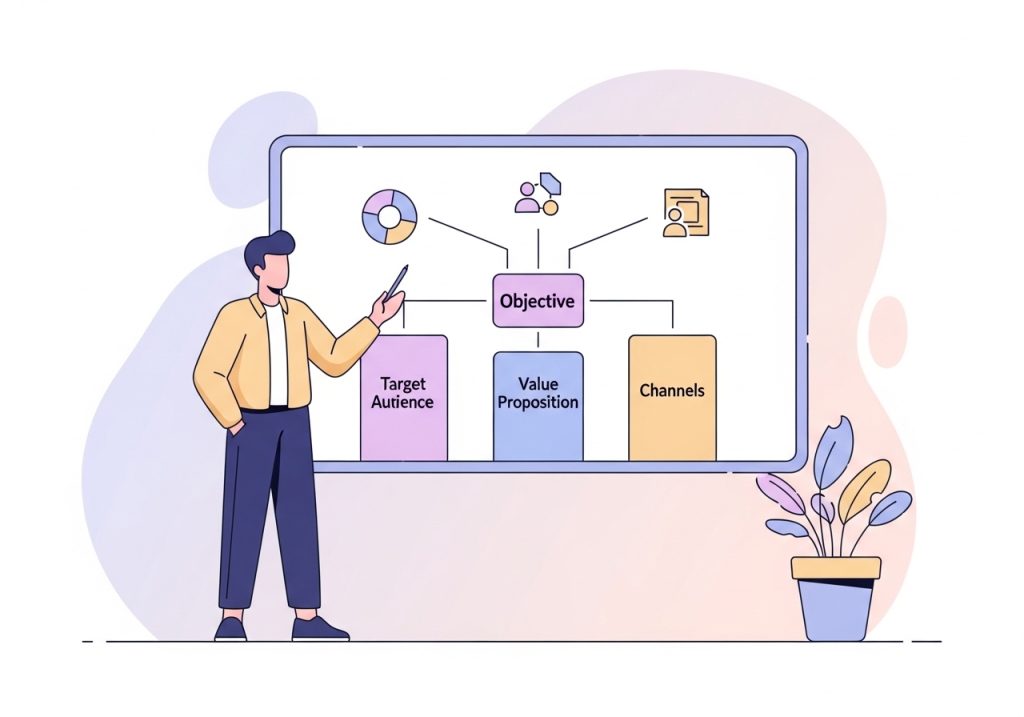
Once your main goal is set, you can build the strategy. This is your comprehensive plan outlining how you will achieve that goal. Your marketing strategy is not a list of tasks; it is a framework for decision-making. It should define your target audience, your unique value proposition, your competitive positioning, and the core channels you will use to connect with customers. This stage is often part of a broader business development effort that aligns marketing with overall company growth.
For example, if your goal is to increase enterprise client acquisition, your strategy might be to position your SaaS product as the most secure and scalable solution on the market. This strategy would then guide your messaging, content focus, and channel selection. You might decide to prioritize channels where enterprise decision-makers are most active, like LinkedIn and industry-specific publications, over platforms like TikTok or Instagram.
Step 3: Choose Specific Tactics to Execute the Strategy
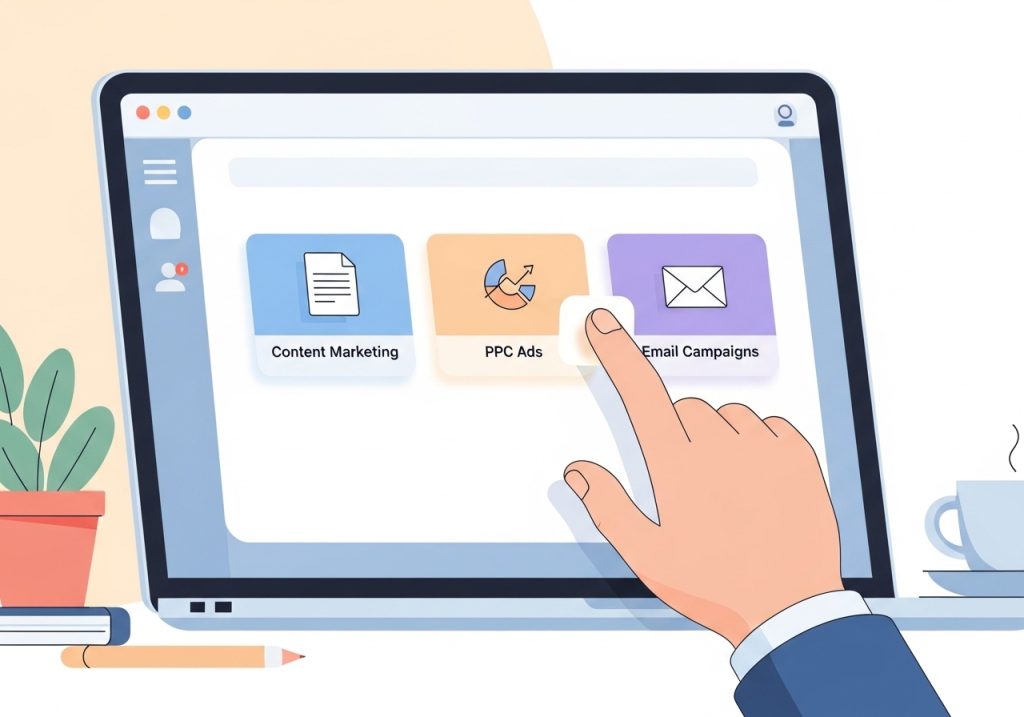
With a clear strategy in place, you can now select the individual actions and initiatives that will bring it to life. Tactics are the concrete, operational steps you take. If your strategy is to be known as the most secure solution for enterprise clients, your tactics might include publishing a white paper on data security, running targeted LinkedIn ads showcasing your security certifications, or hosting a webinar with a cybersecurity expert.
Tactics should be highly specific and measurable. Each tactic must directly support one or more elements of your strategy. The connection should be obvious. If you cannot easily explain how a particular tactic helps you achieve your strategic goals, it might be the wrong one. Many teams use tools that help automate content creation and other marketing tasks, allowing them to execute these tactics with greater consistency and efficiency. As experts at Spider Strategies note, strategy focuses on “what” and “why,” while tactics focus on “how” to execute the plan.
Step 4: Measure Tactical Performance Against Strategic Goals
Executing tactics is not enough; you must measure their effectiveness. Establish key performance indicators (KPIs) for each tactic and track them regularly. For a content marketing tactic, KPIs could be organic traffic, keyword rankings, and lead conversions from blog posts. For a paid ad campaign, you might track click-through rate (CTR), cost per acquisition (CPA), and return on ad spend (ROAS).
The crucial step here is to analyze this data in the context of your overarching strategy. Are your tactics producing the desired results? Is the white paper generating leads from enterprise-level contacts? Are the ads reaching the right job titles? This data allows you to see which actions are effectively contributing to your long-term goals and which are not. This continuous feedback loop is what makes a marketing plan dynamic and effective.
Step 5: Adapt Your Tactics Without Abandoning Your Strategy
The marketing world changes quickly. A tactic that works today might be less effective in six months. It’s important to be flexible and willing to adapt your tactics based on performance data and market shifts. If a particular ad platform is no longer delivering a positive ROAS, it’s time to reallocate that budget to a more promising tactic. This agility is a hallmark of successful marketing teams.
However, tactical flexibility should not be confused with strategic inconsistency. While your tactics can and should evolve, your core strategy should remain stable unless there is a fundamental shift in your business, your market, or your primary goals. Changing your entire strategy too often leads to a lack of focus and momentum. Stick to your plan, but be smart about the actions you use to get there. For example, if your goal is to grow organic traffic, you might adjust your keyword targets or content formats, but your overarching strategy remains a focused plan to boost SEO.
Ultimately, a successful marketing plan requires both a clear vision and effective execution. By defining your goal, building a smart strategy, choosing aligned tactics, and measuring everything, you create a powerful engine for sustainable business growth.
Executing a powerful content strategy requires consistent, high-quality tactics. But creating blog posts every day is a huge drain on time and resources. Ascend automates your entire content workflow, from keyword research and content calendars to writing and publishing SEO-optimized articles directly in WordPress. Stop spending hours on tactical work and start focusing on your strategy. Discover how Ascend can scale your content and drive organic growth.

Written by
Ascend
Ascend is an automated SEO engine for WordPress. It handles keyword research, writes high-quality, search-optimized content, and publishes it directly to your site, so your traffic can grow on autopilot. Learn more