
What Are Business Improvement Techniques? A Guide for Agencies and SaaS
Business improvement techniques are structured methods companies use to enhance efficiency, reduce waste, and improve the quality of their products or services. For marketing agencies and SaaS companies, these techniques are not just for manufacturing floors. They are practical frameworks for refining every process, from client onboarding to software development and content marketing. By systematically analyzing and improving how work gets done, you can build a more resilient and profitable organization.
The Core Definition of Business Improvement
At its heart, business improvement involves a continuous effort to make an organization better. This isn’t about random changes or quick fixes. It is a disciplined approach that uses specific methodologies to identify the root causes of problems and implement lasting solutions. The primary goals are straightforward and universal.
These techniques aim to achieve specific outcomes, including:
- Increased Efficiency: Completing tasks with fewer resources, such as time, money, or effort. For an agency, this could mean reducing the hours spent on a client report. For a SaaS company, it might be streamlining the customer support ticket process.
- Reduced Costs: By eliminating wasteful activities and optimizing resource use, companies can lower their operational expenses. This directly contributes to higher profit margins.
- Improved Quality: Standardizing processes helps ensure a consistent and high-quality output, whether that’s a marketing campaign, a blog post, or a software feature. This builds customer trust and loyalty.
- Greater Agility: Businesses that consistently refine their operations can adapt more quickly to market changes, new technologies, and evolving customer expectations.
Why Improvement Techniques Matter for Modern Companies
In competitive markets, efficiency is a significant advantage. For agencies and SaaS businesses, implementing formal improvement techniques can transform operations and drive sustainable growth. The benefits are tangible and affect nearly every part of the business.
Adopting these methods leads to several key advantages. It helps with scaling your marketing and operational efforts effectively. When processes are documented and optimized, bringing on new team members or clients becomes much smoother. It also enhances client and customer satisfaction. Reliable, high-quality delivery builds strong relationships and reduces churn. Finally, it creates a culture of continuous improvement, where employees are empowered to identify and solve problems, leading to better morale and innovation.
Key Methodologies for Improving Your Operations
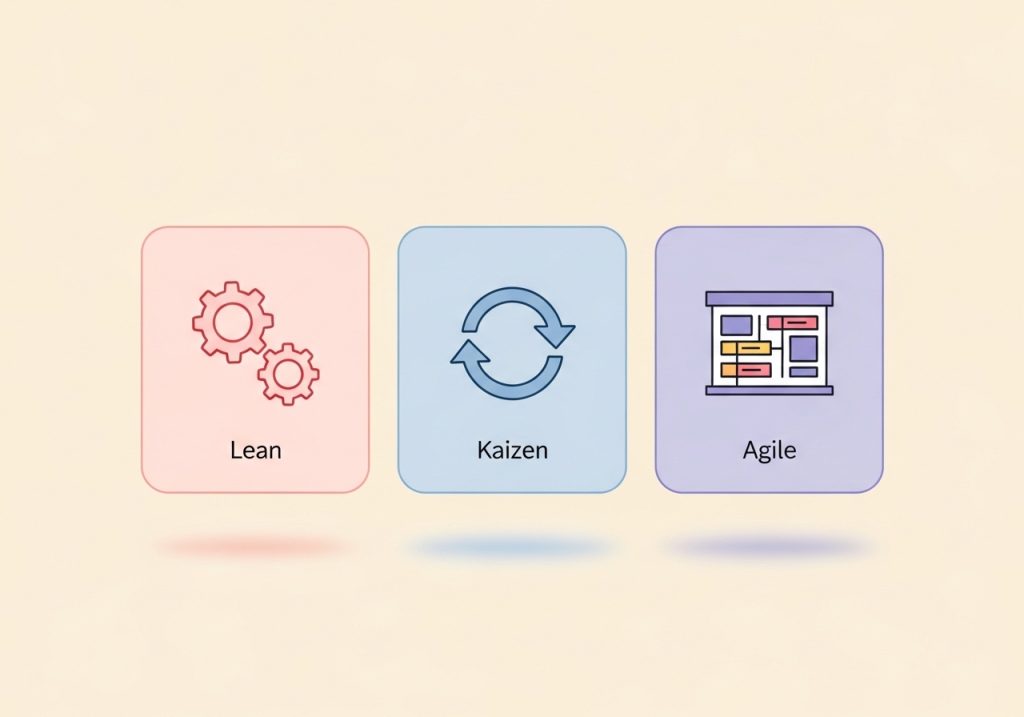
Several established methodologies provide frameworks for business improvement. While many originated in manufacturing, their principles are highly adaptable to the service and technology sectors. According to a guide from Knack, some of the most popular methodologies include Lean, Six Sigma, and Total Quality Management. Here are a few that are particularly relevant for agencies and SaaS companies.
Lean Methodology
The core idea of Lean is to maximize customer value while minimizing waste. Waste is defined as any activity that consumes resources but does not add value for the customer. In a SaaS context, waste could be overly complex features that users don’t need or a convoluted signup process. For an agency, it could be excessive internal meetings that delay client work.
Kaizen
Kaizen is a Japanese term that means “change for the better” or “continuous improvement.” This philosophy centers on making small, ongoing changes that accumulate over time to produce significant results. Instead of waiting for a large-scale project, teams are encouraged to find and implement small improvements every day. This could be as simple as creating a new email template to save time or refining a checklist for publishing content.
Agile
While known for software development, Agile principles are now widely used by marketing and operations teams. Agile focuses on iterative work cycles called “sprints,” allowing teams to adapt to changing priorities and deliver value quickly. This approach is ideal for managing complex projects like website redesigns or multi-channel marketing campaigns where requirements may change.
Applying Improvement Techniques to Your Content Strategy
Content marketing is a powerful engine for organic growth, but it can also be resource-intensive. This makes it a perfect area to apply business improvement techniques. Manual processes in content creation, from keyword research to writing and internal linking, are often inefficient and difficult to scale.

By treating content creation as a core business process, you can identify bottlenecks and opportunities for optimization. For example, are your writers spending too much time searching for topics? Is your approval process slow and inconsistent? Each of these is a point of friction that can be smoothed out. One of the most effective ways to do this is through automation. A practical guide to using AI for content creation shows how technology can handle repetitive tasks, freeing up your team for more strategic work.
Tools that automate keyword research, generate content calendars, and even produce high-quality drafts can eliminate dozens of hours of manual work each month. This is a direct application of the Lean principle: removing non-value-adding activities to focus on what matters most, creating content that drives traffic and conversions.
How to Measure the Success of Your Improvement Efforts
You cannot improve what you do not measure. To know if your business improvement techniques are working, you must track relevant key performance indicators (KPIs). The right KPIs will depend on the process you are trying to improve, but they should always be specific, measurable, and tied to business goals. Setting clear metrics helps standardize how work is managed and evaluated.
Here are some examples of KPIs for agencies and SaaS companies:
- For an Agency: You could track metrics like average project turnaround time, client retention rate, or project profitability. A reduction in turnaround time after implementing a new project management workflow is a clear sign of success.
- For a SaaS Company: Relevant KPIs might include customer acquisition cost (CAC), monthly recurring revenue (MRR), customer churn rate, or the number of support tickets resolved per day.
- For Content Marketing: You can measure the time from idea to publication, organic traffic growth, keyword rankings, or the number of leads generated from the blog.
By regularly reviewing these metrics, you can validate your changes, identify new areas for improvement, and demonstrate the return on investment for your efforts.
Implementing business improvement techniques is a commitment to operational excellence. It involves a shift in mindset from simply doing the work to constantly thinking about how to do the work better. For agencies and SaaS companies, this systematic approach reduces internal friction, improves scalability, and ultimately delivers more value to clients and customers. By starting with one process, like content marketing, you can build momentum and apply these powerful principles across your entire organization.
Systematizing your content is one of the most effective business improvements you can make. Ascend fully automates your blog content strategy, from keyword research and calendar creation to writing and publishing every day in WordPress. It’s the hands-off way to drive organic traffic so you can focus on growth. See how Ascend works.

Written by
Ascend
Ascend is an automated SEO engine for WordPress. It handles keyword research, writes high-quality, search-optimized content, and publishes it directly to your site, so your traffic can grow on autopilot. Learn more