
What Is Automated Content Creation? A Practical Guide
Automated content creation is the process of using artificial intelligence and software to generate materials like blog posts and reports with minimal human intervention. It allows marketing teams, agencies, and SaaS companies to scale their content production efficiently while maintaining a consistent brand voice. This approach helps grow organic traffic without the extensive time investment typically required for research, writing, and calendar management.
Defining Automated Content Creation
Automated content creation uses technologies like Natural Language Generation (NLG) and machine learning models to transform data and user inputs into human-readable text. It is a sophisticated process, far removed from older article-spinning tools that simply rearranged existing sentences. Modern systems can understand context, adopt a specific tone of voice, and produce original, high-quality content tailored to a target audience. According to enterprise software company Aprimo, automated content generation uses computer algorithms to create content without direct human writing at every step.
These platforms often function as part of a broader content automation marketing strategy that covers the entire content lifecycle. They can perform keyword research, generate a content calendar, write entire articles, and even create accompanying images. The goal is not to replace human strategists but to handle the repetitive and time-consuming aspects of content production. This frees up creative teams to focus on higher-level strategy, campaign planning, and analyzing performance data. Think of it as a powerful assistant that manages the foundational work, allowing experts to refine and perfect the final output.
The Core Benefits for Marketing and Tech Companies
For marketing agencies and SaaS businesses, the pressure to produce a steady stream of valuable content is constant. Automated content creation offers several practical advantages that directly address this challenge, turning content from a bottleneck into a growth driver.

- Increased Efficiency: The most immediate benefit is a significant reduction in the time spent on research, outlining, and writing first drafts. A task that might take a human writer several hours can be completed by an AI in minutes. This acceleration allows teams to accomplish more without expanding headcount. As workflow automation platform Activepieces notes, these tools handle the entire workflow from planning to publishing, greatly reducing manual effort.
- Scalability: Manual content creation has a natural limit. Automation makes it possible to increase content output from one blog post a week to one per day. This consistency is a key factor in building organic traffic and establishing topical authority with search engines. For an agency, this means you can scale service delivery for more clients. For a SaaS company, it means you can quickly build a comprehensive resource hub.
- Brand Consistency: An automated system can be trained on your brand guidelines, ensuring every piece of content maintains the correct tone, style, and messaging. This is especially useful for companies with multiple writers or for agencies managing several client accounts with distinct brand voices. It eliminates the variability that can creep in when different people contribute to the blog.
- Cost-Effectiveness: By automating the production of first drafts and routine content, companies can allocate their human resources to more strategic initiatives like customer research, creative campaign development, and performance analysis. This optimizes the content budget and improves the overall return on investment from your content marketing program.
A Look Inside the Automated Content Creation Process
Understanding how these tools work helps clarify their role in a modern content strategy. While specific features vary between platforms, the core process generally follows a logical sequence from strategy to publication. A fully integrated system handles these steps to provide a nearly hands-off experience.
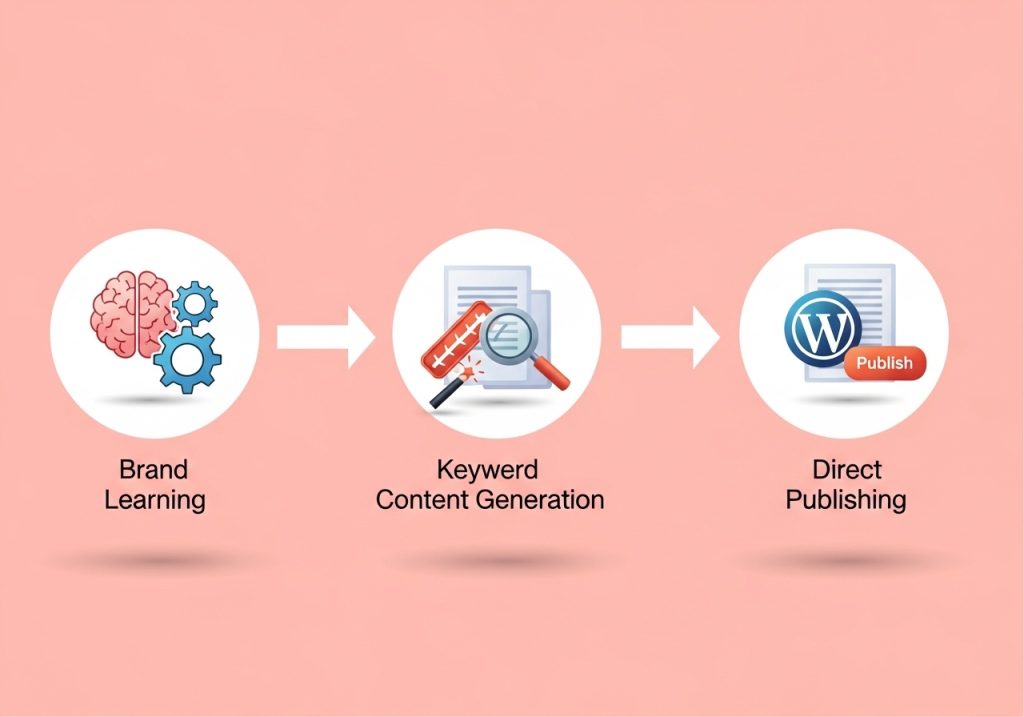
- Brand and Audience Analysis: The process begins when the system learns about your company. It analyzes your website, existing content, and even your competitors to build a foundational understanding of your brand identity and market position. This step is critical for ensuring the generated content is relevant and aligned with your goals. It involves a deep dive into your messaging, tone, and the specifics of defining your ideal customer profile.
- Keyword Research and Planning: Using this brand knowledge, the AI performs keyword research to identify topics that will resonate with your audience and have a strong potential to rank in search results. It prioritizes keywords based on search volume, competition, and relevance. The system then organizes these ideas into a structured, 30-day content calendar, saving hours of manual planning.
- Draft Generation: With a topic selected, the system generates a complete blog post. This includes a title, introduction, body paragraphs with proper headings, and a conclusion. Many advanced platforms also handle internal linking to other relevant posts on your site and integrate on-brand images automatically.
- Integration and Publishing: The best tools integrate directly with your content management system (CMS). For instance, a platform built for WordPress can publish articles directly to your blog, populate SEO plugin fields (like Yoast or Rank Math), and schedule posts. This makes the entire workflow manageable from a single, familiar dashboard.
Key Features to Look for in an Automation Platform
Not all automation tools are created equal. When evaluating a platform for your business, consider these critical features to ensure it aligns with your goals and delivers a true return on your investment.
- Quality of Output: The content must be original, accurate, and well-written. Look for a tool that produces content indistinguishable from what a skilled human writer would create. This means checking for logical flow, correct grammar, and a natural tone while avoiding common AI-generated phrases that can feel generic or robotic to readers.
- CMS Integration: A platform that connects directly to your website (like WordPress) saves considerable time by eliminating the need to copy, paste, and reformat content. Native integration also helps with technical SEO details, ensuring that metadata, images, and links are correctly implemented upon publishing.
- SEO Capabilities: The tool should do more than just write. It should incorporate SEO best practices throughout the process. This includes strategic keyword optimization, automated meta description generation, intelligent internal linking, and adding appropriate alt text for images.
- Customization and Control: You need the ability to guide the AI. A good platform allows you to set the brand voice, define target audiences, review and edit drafts before they go live, and provide feedback to improve future output. The user should always be in control of the final strategic direction.
How to Implement Automation in Your Content Workflow
Integrating automated content creation into your strategy does not have to be an abrupt change. A measured approach ensures a smooth transition and allows you to measure the impact effectively. Start by identifying a specific area where automation can provide the most value, such as producing top-of-funnel blog posts that answer common customer questions or drafting initial product descriptions for e-commerce pages.
Set clear, measurable goals for what you want to achieve. For example, your objective could be to increase publishing frequency from once a week to three times a week without increasing your budget. Use the automated tool to generate high-quality first drafts, and have your team focus on refining and enhancing them with unique insights, proprietary data, and expert opinions. This hybrid model combines the speed and scale of AI with the strategic depth of human expertise, leading to a powerful and sustainable content engine for your business.
Ready to put your content marketing on autopilot? Ascend is a fully automated content creation tool that lives inside your WordPress dashboard. It learns your brand, performs keyword research, and publishes a high-quality, SEO-optimized blog post every single day. Stop spending hours on content and start seeing organic growth. Discover how Ascend can transform your content strategy.

Written by
Ascend
Ascend is an automated SEO engine for WordPress. It handles keyword research, writes high-quality, search-optimized content, and publishes it directly to your site, so your traffic can grow on autopilot. Learn more