
What Are Content Machines? A Guide to Automated Content Strategy
Content machines are automated systems, typically powered by artificial intelligence, designed to research, write, and publish blog content with minimal human intervention. For marketing agencies, SaaS companies, and other fast-moving businesses, the demand for high-quality content to drive organic traffic is relentless. A manual approach involving keyword research, writing, editing, and publishing can consume hundreds of hours. Content automation systems offer a way to maintain a consistent publishing schedule without allocating your entire team to the blog.
Defining the Modern Content Machine
It is important to distinguish a true content machine from a simple AI writing assistant. While a writer might help you draft a paragraph or brainstorm ideas, a content machine manages a much larger portion of the content lifecycle. These systems are built to operate as a core part of your marketing infrastructure. They connect different functions that are usually handled by separate people or tools. The core idea behind content automation marketing is to use technology to handle the repetitive, process-driven parts of creating and distributing articles.
A complete system is designed to turn a strategic goal, like “increase organic traffic for keywords related to productivity software,” into a series of published articles. This involves several interconnected stages:
- Keyword Research and Strategy: An automated system can analyze search trends and competitor content to build a full content calendar based on topics your audience is looking for. It identifies keyword opportunities that align with business goals.
- Full-Draft Creation: Based on the strategy, the system writes complete, SEO-friendly articles. This includes structuring the post with proper headings, generating on-brand copy, and incorporating keywords naturally. The goal is to produce content that is ready for a final human review.
- Media and Linking: Advanced platforms can generate or source relevant images, add alt text, and build a logical internal linking structure to improve your site’s SEO authority. This saves editors the tedious task of finding and optimizing visuals for every post.
- Direct Publishing: The best systems integrate directly with your content management system, like WordPress. They can schedule and publish completed posts automatically, creating a hands-off workflow from idea to live article. This direct integration, as outlined in one guide to content automation, connects every stage of the content lifecycle.
Key Advantages for Scaling Marketing Efforts
For agencies and product teams, the primary benefits of adopting a content machine are tied to efficiency and growth. Manually producing content is slow and expensive, making it difficult to compete in crowded markets. Automation changes the equation by providing significant operational advantages.

First, scalability becomes much more achievable. A marketing team might struggle to publish four well-researched blog posts per month. An automated system can produce a high-quality post every day. This volume and consistency send strong positive signals to search engines, which can accelerate organic traffic growth. It also ensures your blog remains a fresh and active resource for your audience. This approach is especially powerful for small business content marketing, where resources are often limited.
Second, these systems free up your most valuable resource: your team’s strategic thinking. When skilled marketers are not bogged down by the repetitive tasks of writing and formatting, they can focus on higher-impact activities. This includes campaign analysis, customer research, product marketing, and building strategic partnerships. The machine handles the production, while the humans guide the strategy and add the creative touches that resonate deeply with customers.
How to Choose the Right Automated Content System
Not all content automation tools are created equal. When evaluating options for your business, it is helpful to look past marketing claims and focus on a few core capabilities. The goal is to find a system that integrates smoothly into your workflow and produces content you can be proud of. Thinking about a blueprint for a content machine can help you identify the necessary components.
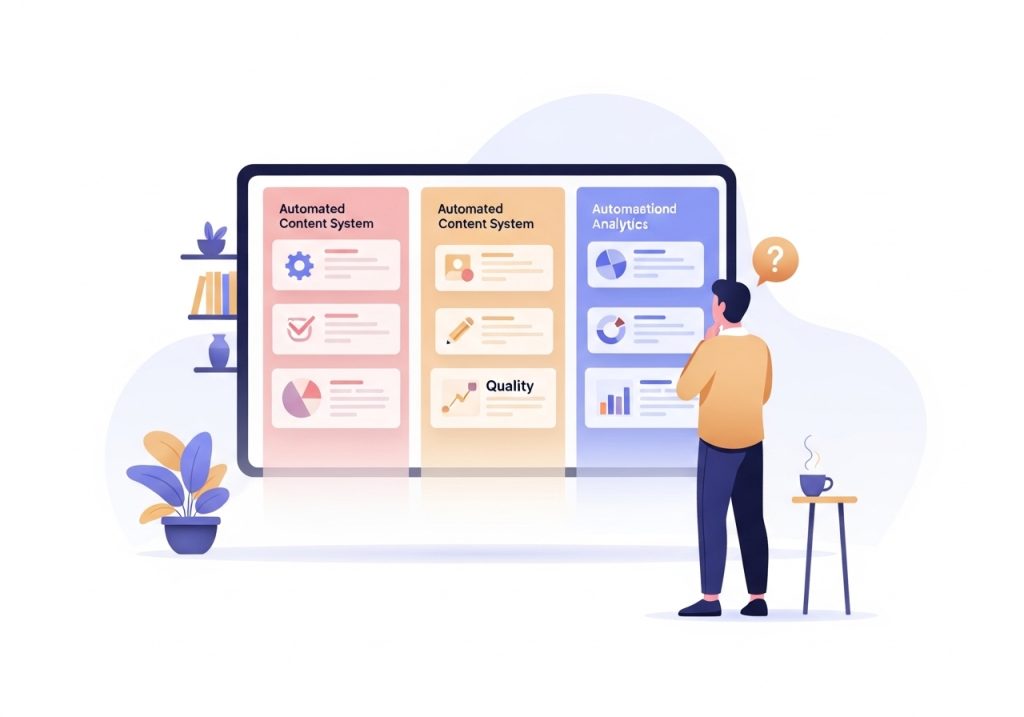
Consider these factors when making your decision:
- Quality of Output: The content must be accurate, readable, and aligned with your brand voice. Look for a tool that allows you to provide detailed brand guidelines and learns from your feedback. A system that produces generic, low-quality articles will do more harm than good by damaging your brand’s credibility.
- Depth of Integration: How well does the tool fit with your current technology stack? A platform like Ascend that operates directly within your WordPress dashboard removes friction. It avoids the need to copy and paste content between different applications, saving time and reducing the chance of errors.
- Scope of Automation: Does the tool handle the entire process from keyword research to publishing? A complete solution provides more value than a point solution that only handles one step. Full automation ensures the strategy, writing, and publishing are all connected and work toward the same goal.
- Customization and Control: You should always remain in control of your content strategy. A good system allows you to review, edit, and approve content before it goes live. It should also be customizable, letting you define your ideal customer profile, competitors, and desired tone.
Integrating Automation into Your Broader Strategy
The most effective marketing teams view content machines not as a replacement for human talent, but as a powerful force multiplier. Automation handles the predictable, time-consuming work of content production. This gives your team the bandwidth to focus on creativity and strategy that machines cannot replicate.
Use your automated content engine to build a strong foundation of SEO-driven articles that attract a consistent flow of organic traffic. This creates a predictable baseline of inbound interest. Then, task your human marketers with creating unique, high-impact assets on top of that foundation. This could include original research reports, webinars, in-depth case studies, or viral social media campaigns. By combining the scale of automation with the insight of human creativity, you create a marketing strategy that is both efficient and highly effective.
Ready to stop spending countless hours on manual content creation? Ascend automates your entire content workflow, from keyword research to publishing, right inside your WordPress dashboard. Let us build your content machine so you can focus on growing your business. Discover how Ascend works.

Written by
Ascend
Ascend is an automated SEO engine for WordPress. It handles keyword research, writes high-quality, search-optimized content, and publishes it directly to your site, so your traffic can grow on autopilot. Learn more